
Blackheads vs sebaceous filaments is one of the most common mix-ups in skincare, and the answer is usually in plain sight. Pale gray or beige dots spread evenly across your nose, back within a few weeks of a pore strip, are sebaceous filaments: a normal part of every oil-producing pore. Darker dots that sit at random, feel slightly raised and stay put are blackheads, a small clog and the mildest form of acne.
That difference changes what you can expect. A blackhead can clear. A sebaceous filament can only look smaller, because your skin needs it.
What a sebaceous filament actually is
Every pore that makes oil has a lining. Sebum travels up from the oil gland along a fine, thread-like column of oil and shed cells, and that column is the sebaceous filament. Cleveland Clinic describes filaments as a normal structure of the skin, not a condition.
You notice them most where oil glands are largest and most numerous: the nose, the inner cheeks beside it, the chin and the forehead. They are usually gray, light brown or faintly yellow, and flat to the touch. Empty one by squeezing and it fills again, often within about a month, because your skin never stops making oil.
What makes a blackhead different
A blackhead starts the same way but goes one step further. Dead cells and thickened oil build up until they block the opening, forming a plug called an open comedo. The plug widens the pore, its top meets the air, and the pigment and oils in it darken. That is why a blackhead looks like a deliberate black dot rather than a faint shadow.
Because it is a true blockage, a blackhead counts as non-inflamed acne. For the full story on how they form, read What Are Blackheads? If you also see small white bumps, Whiteheads vs Blackheads covers the closed version of the same clog.
Blackheads vs sebaceous filaments, side by side
| Sebaceous filament | Blackhead | |
|---|---|---|
| Job in your skin | Carries oil to the surface. Always there | A blockage. Not part of normal skin |
| Shade | Light gray, beige or faintly yellow | Dark brown to black |
| Layout | Evenly spaced, all much the same size | Scattered, in different sizes |
| Surface | Flat and smooth | Often a tiny, firm raised point |
| Under pressure (not advised) | A soft, pale, waxy strand | A firmer plug with a dark end |
| Comes back | Within weeks, in the same pores | Less predictable, and not always in the same spot |
| Is it acne? | No | Yes, the mildest, non-inflamed kind |
| Realistic goal | Make them look smaller and lighter | Clear them and keep pores flowing |
A quick mirror test
When you are weighing up sebaceous filaments vs blackheads, you do not need a magnifying mirror. It actually helps to put it away.
- Start at arm’s length. Wash, wait about half an hour, then look in daylight from a normal distance. Filaments tend to blend into an even texture from there. Blackheads still read as separate dots.
- Let light come from the side. Stand next to a window so the light skims across your nose. Flat filaments barely cast a shadow; the raised plug of a blackhead often does.
- Compare left and right. Filaments usually mirror each other on both sides of the nose. Blackheads rarely line up like that.
- Take two photos. Snap one after cleansing and another about ten days later, same spot, same light. Dots that look identical are filaments. A single dark dot that has changed or gone was a blackhead.
Most noses have both. A field of filaments with two or three real blackheads among them is very common, often in the crease beside a nostril.
Why some noses show them more
- Gland size and genetics. Some people simply have larger, busier oil glands on the nose, so filaments look fuller and darker.
- Oil by the end of the day. Filaments fill as sebum builds up, which is why they look most obvious by late afternoon.
- Heat and humidity. Oil flows more freely in warm, humid weather, and many people see more of them in summer.
- Leftover sunscreen and makeup. Residue can sit in the pore opening and tint it for a few hours.
- Age and sun. As skin loses firmness, pore walls slacken and the openings look wider.
- Squeezing. Repeated pressure stretches the opening, so the pore looks bigger even when it is empty.
How to make sebaceous filaments less visible
The honest target is lighter, smaller-looking dots, not a nose without them. These habits do the most:
- Wash gently twice a day. Clearing surface oil means filaments look less full. Your face should feel clean, not tight.
- Use salicylic acid one to three times a week. As a BHA it is oil-soluble, which lets it reach into the pore lining and loosen what collects at the opening.
- Consider niacinamide. In a small study, a 2% niacinamide product lowered the rate of facial oil output over a few weeks. Less oil can make filaments look less obvious.
- Take sunscreen and makeup off properly at night. A cleansing oil or balm followed by a gentle wash helps lift what settles into pores.
- Keep moisturizing. Dry, tight skin looks rough, and rough texture makes pores stand out.
- Wear sunscreen every day. It helps protect the firmness that keeps pore openings looking small.
Give any change four to eight weeks. A dermatologist can add a prescription retinoid if you want more, but the result lasts only as long as you keep going, because the filaments stay part of your skin.
How to clear blackheads
Blackheads need the same base routine, plus a little more patience and sometimes a retinoid.
- Keep salicylic acid in your routine. It is one of the ingredients the American Academy of Dermatology suggests for blackheads and whiteheads.
- Add a retinoid at night if needed. Adapalene 0.1% gel is sold without a prescription in the US for acne, for anyone 12 or older. Start two or three nights a week, build up slowly, and keep it off acid-mask nights at first.
- Leave extraction to professionals. A dermatologist or licensed esthetician can clear stubborn blackheads with sterile tools and much less risk of marks.
- Wait six to eight weeks before you judge a new routine.
For a step-by-step plan, see the best way to remove blackheads.
Habits that make both look worse
Cleveland Clinic advises against squeezing filaments and against pore strips, which can pull them out and dry the skin. A few other quick fixes cause similar trouble:
- Pore strips: a clean-looking nose for a day, then the pores refill, and frequent use can leave skin red.
- Fingernails and metal extractors: stretched pores, marks and a real chance of infection.
- Pore vacuums: strong suction can bruise skin and break tiny blood vessels.
- Gritty scrubs and daily peels: irritated skin often looks shinier and rougher, not smoother.
- Kitchen remedies: toothpaste, baking soda, lemon juice and glue masks irritate skin without clearing pores.
When to see a dermatologist
Filaments and a few blackheads are not a medical problem. It is worth booking an appointment if:
- You notice soft, yellowish bumps with a small dip in the center, often on the forehead or cheeks after 40. This may be sebaceous hyperplasia, which is different and worth a professional look.
- A spot grows, bleeds, crusts, changes color or does not heal.
- Blackheads come with red, painful pimples or leave marks behind.
- Nothing changes after two to three months of a steady routine.
Our picks for oily, congested skin
These are cosmetic products. They can help pores look clearer and skin feel more balanced, but they will not make sebaceous filaments disappear, and they are not acne treatments.
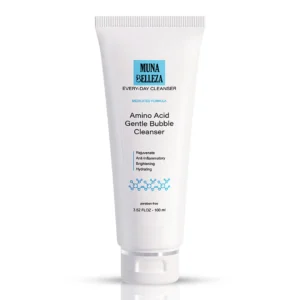
Amino Acid Gentle Bubble Cleanser
A gentle foaming cleanser built on amino acid cleansing agents, with glycerin, betaine and honey extract. It lifts oil and sunscreen without a tight finish and is fragrance-free, so it works as the twice-daily first step for filaments and blackheads alike. Shop the Amino Acid Gentle Bubble Cleanser
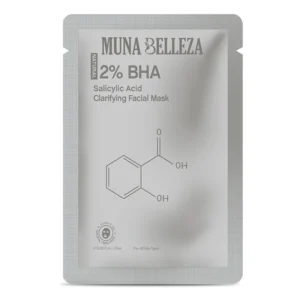
Salicylic Acid Face Mask
A sheet mask soaked in salicylic acid (2% BHA) with a little glycolic acid and witch hazel water. Leave it on for 15 minutes, once or twice a week, at night. It contains fragrance. Skip it if you are allergic to aspirin or your skin is broken or irritated, keep it off retinoid nights, and wear sunscreen the next day. Shop the Salicylic Acid Face Mask
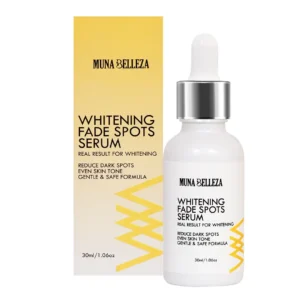
Dark Spot Correcting Serum
A light, watery serum with niacinamide and arbutin, plus sodium hyaluronate for hydration. It is made for the look of dark marks, and its niacinamide also fits the oil-control step above. If your skin is sensitive, try it on a small patch first. Shop the Dark Spot Correcting Serum
If your skin is oily all over, our page on skincare for oily skin shows how these fit into a full week.
Common questions
Do sebaceous filaments mean my pores are clogged?
No. A filament is an open channel that lets oil out. A pore is clogged only when that channel gets plugged, which is when a blackhead or whitehead forms.
Can a sebaceous filament turn into a blackhead?
It can. If dead cells collect at the opening and the oil thickens, the channel can plug and darken at the top. A steady routine that keeps oil moving helps with both.
Why do my filaments look darker in some photos?
Flash, overhead light and magnification all exaggerate them. The tip can also look darker where oil meets the air. If the dots are small, even and quick to come back, they are still filaments.
Is an occasional facial extraction OK?
Now and then, done by a trained professional, it is fine, for example before an event. The pores refill within weeks, so it will not change how they look in the long run.
Do sebaceous filaments go away with age?
Not completely. Oil output tends to drop with age, so they can look less full, but pores may look wider as skin loses firmness.
Do I need different products for filaments and blackheads?
No. Gentle cleansing, salicylic acid, moisturizer and sunscreen help both. Blackheads may also need a retinoid or professional extraction.
Want a simple place to start? Shop our Skincare for Blackheads & Large Pores range, or begin with the Salicylic Acid Face Mask once a week.
 Amino Acid Gentle Bubble Cleanser
 Salicylic Acid Face Mask
 Dark Spot Correcting Serum