Whiteheads vs blackheads comes down to one detail: whether the clogged pore is sealed or open at the surface. A whitehead is a plug of oil and dead skin cells trapped under a thin layer of skin, so it shows as a small white or skin-colored bump. A blackhead is the same plug with the top left open, and the exposed surface turns dark. Neither one is dirt, and both respond to the same steady, gentle routine.
If you have a mix of both, you are in good company. Dermatologists group blackheads and whiteheads together as comedones, the mildest, non-inflamed form of acne. Knowing which one you are looking at still helps. It tells you what to expect, what not to squeeze, and when a small bump is not a clogged pore at all.
Whiteheads vs blackheads at a glance
| Whitehead | Blackhead | |
|---|---|---|
| Medical name | Closed comedo | Open comedo |
| Surface of the pore | Covered by a thin layer of skin | Open to the air |
| Color | White, cream or the same tone as your skin | Dark brown to black |
| How it feels | A small, firm, slightly raised bump | Mostly flat, sometimes a tiny rough point |
| Where it shows up | Forehead, chin, cheeks, jawline | Nose, chin, forehead, center of the face |
| Why it looks that way | The plug sits under skin, so it reads pale | Melanin and oils in the plug darken when air reaches them |
| Can you squeeze it? | No. With no opening, pressure pushes the plug deeper | Sometimes, but it often bruises the skin and the pore refills |
| Daily care | Gentle cleansing, one pore-clearing ingredient, light moisturizer, time | The same, with less scrubbing than you might expect |
How one clogged pore becomes a whitehead or a blackhead
Every pore on your face is the opening of a hair follicle with an oil gland attached. Normally, sebum (your skin’s oil) flows up and out, and the cells lining the follicle shed without you noticing. Trouble starts when those cells shed faster than usual and stick together. Mixed with oil, they form a soft plug called a microcomedo, which is too small to see.
What happens next decides the name. If the plug builds up behind a narrow opening that stays closed, you get a whitehead. If the plug stretches the opening wide, air reaches its top layer, and the melanin and oils there oxidize and darken. That is a blackhead. A whitehead that keeps filling can push its opening wide and turn into a blackhead. The reverse does not happen: an open pore does not seal itself again.
So the black in a blackhead is not grime. This matters, because scrubbing harder will not wash it away. It mostly leaves skin red and irritated while the dot stays put.
What whiteheads look like up close
Whiteheads are the tiny white pimples on skin that never seem to come to a head. They are usually 1 to 3 mm across, smooth, and not sore. Many people find them in clusters across the forehead or along the jaw, where skin feels bumpy under your fingers even when the spots are hard to see. Tilt a mirror so the light comes from the side and they show up as small raised dots.
A whitehead has no red ring around it. Once the area turns red, swollen or tender, the pore has become inflamed and it is no longer just a whitehead. A yellow center on a red base is a pustule, which needs a little more care. Our guide to the different types of pimples walks through the rest of the family.
What blackheads look like up close
Blackheads sit flat in the pore and look as if someone dotted the skin with a fine pen. They gather where pores are larger and oil flow is highest: the nose, the creases beside the nostrils, the chin and the middle of the forehead. Run a fingertip over a patch and it may feel slightly gritty.
Early blackheads are often gray or brown rather than truly black. For a closer look at why they form and where else they appear, read What Are Blackheads?
Those “white blackheads” on your nose
Plenty of people search for white blackheads on nose after squeezing a dark dot and watching a pale, waxy thread come out. That thread is the oil and cell plug itself. Only the very top, the part exposed to air, was dark.
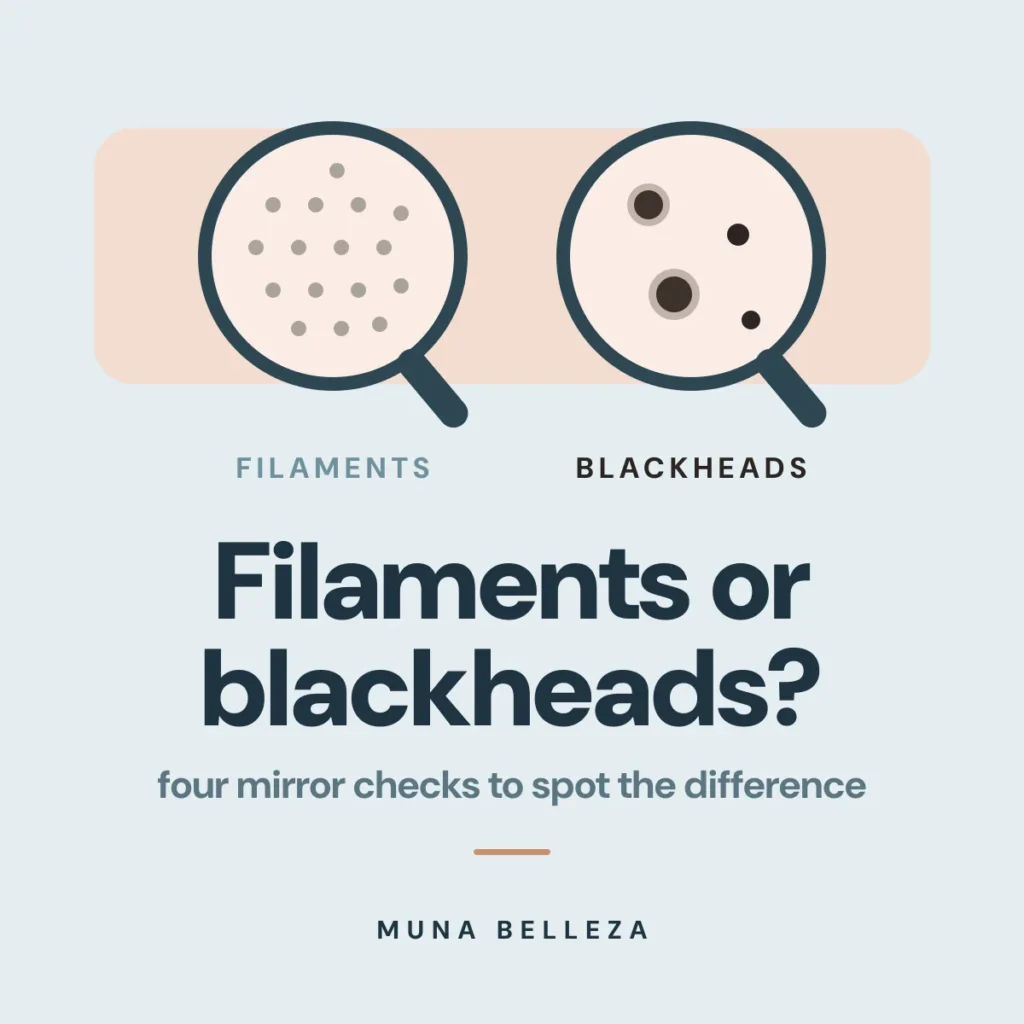
Often, though, the even grid of small gray or beige dots across the nose is not blackheads at all. These are usually sebaceous filaments: normal channels of oil that every face has, and that fill back up within a few weeks of being emptied. They are lighter than blackheads, evenly spaced and flat. You can make them look less obvious, but you cannot make them go away for good. Our guide to sebaceous filaments vs blackheads shows how to tell them apart.
Tiny white bumps that are not whiteheads
Not every small white dot is a clogged pore. Milia are tiny cysts of keratin, the protein in the top layer of skin, sitting just under the surface. Compared with whiteheads, milia are:
- Harder, like a grain of sand under the skin, and pearly white
- Common around the eyes, on the eyelids and on the upper cheeks, where whiteheads are rare
- Unchanged for weeks or months, without the come-and-go pattern of breakouts
- Unaffected by acne products, and impossible to squeeze out
Milia are not a type of acne, and they are harmless. Many clear up on their own. If they bother you, a dermatologist can lift them out with a sterile tool. Please do not try this at home, especially near the eyes.
The other common look-alike is white pimples on face that feel sore or sit on a red base. Those are pustules, and the line between a whitehead and a pustule is inflammation. If you are unsure, Should You Pop Pimples? explains why leaving them alone is usually the safer choice.
Why you might get more of one than the other
Both start from the same ingredients, so whether you lean toward blackheads vs whiteheads depends on your skin and your habits. The usual factors:
- Oil output and pore size. Oilier skin with wider openings tends toward blackheads, especially on the nose. Skin with smaller openings often leans toward whiteheads.
- Genetics and hormones. Some people simply build more plugs. Hormone shifts around periods, pregnancy or changes in contraception can bring a run of whiteheads along the jaw and chin.
- Heavy products. Rich creams, thick balms, and hair oils or styling products that drift onto the forehead can add to the plug. Whiteheads along the hairline are a common sign.
- Sweat and friction. Workouts, humid weather, helmets, hats and phone screens hold oil and sweat against the skin.
- Over-scrubbing. Harsh scrubs and drying cleansers irritate skin, which tends to make breakouts look worse, not better.
Season plays a part too. Many people notice more blackheads in humid summers, and more whiteheads in winter, when heavier creams come out and indoor heating dries the surface. If you travel between climates, change textures before you add more products.
How to care for whiteheads and blackheads
Because whiteheads and blackheads share a cause, they share a routine. The aim is to help the follicle lining shed normally and to clear oil without stressing your skin.
- Cleanse twice a day, gently. Morning and night, plus after heavy sweating. Use lukewarm water and your fingertips. A mild foaming cleanser is enough, and skin should not feel tight afterward.
- Add one pore-clearing ingredient. Salicylic acid, a BHA, dissolves in oil, so it can work inside the pore. Benzoyl peroxide is another over-the-counter option. In the US, adapalene 0.1% gel, a retinoid that helps the pore lining shed normally, is available over the counter for people aged 12 and older; rules in other countries vary. Start with one active, not three.
- Moisturize with a light texture. Gel-creams and lotions sit more comfortably on congested skin than heavy balms, and they help your skin tolerate active ingredients.
- Wear sunscreen every morning. Acids and retinoids can make skin more sensitive to the sun, and sun-stressed skin is harder to keep calm.
- Keep your hands off. A whitehead has no opening, so pressing it drives oil and cells deeper and can leave a mark that lasts far longer than the bump.
- Give it six to eight weeks. That is how long the American Academy of Dermatology suggests trying a routine before judging it. Single whiteheads can linger for weeks; fewer new ones is the first sign you are on track.
What helps one more than the other
For blackheads, a weekly salicylic acid mask can be a useful extra on oily areas. Pore strips lift the dark tops for a day or two, but the pore refills, and the pull can be rough on thin or sensitive skin. The best way to remove blackheads compares the options, and there is a separate guide for blackheads on the nose.
For whiteheads, consistency counts for more than strength. Because they are sealed, they respond slowly. A retinoid tends to make the biggest difference over time, along with checking that nothing in your routine is too rich for your skin. If you want to understand acids before you start, read What Does Salicylic Acid Do for Your Skin?
When to see a dermatologist
Blackheads and whiteheads are common and usually mild, but book an appointment if:
- You have followed a steady routine for six to eight weeks and see no change
- Whiteheads keep turning into red, sore bumps, or you are getting deep, painful lumps
- Breakouts are leaving dark marks or small pits
- White bumps around your eyes stay exactly the same for months (they may be milia)
- Sudden breakouts in adulthood arrive with other changes, such as irregular periods or new hair growth
A dermatologist can extract stubborn comedones safely and prescribe stronger options when over-the-counter care is not enough.
Our picks for clogged pores
Skincare cannot empty a deep whitehead overnight, and no product replaces a dermatologist for inflamed or painful acne. These three fit the gentle, steady routine above.
Salicylic Acid Face Mask
A sheet mask carrying 2% salicylic acid (a BHA), some glycolic acid and witch hazel water, made for oily areas and the look of visible pores. Use it as an occasional extra rather than a daily step: 15 minutes, once or twice a week. It contains fragrance, so patch-test first if your skin reacts easily, and leave it out if you have an aspirin allergy or the skin is cut, raw or irritated. Shop the Salicylic Acid Face Mask
Amino Acid Gentle Bubble Cleanser
A soft foam with amino acid-based cleansing agents and glycerin, for morning and night. It lifts oil and the day’s sunscreen without the tight feeling that tempts people to scrub. It has no exfoliating acid, so pair it with one pore-clearing step. Shop the Amino Acid Gentle Bubble Cleanser
Turmeric Face Wash
A daily face wash with turmeric, aloe vera and sodium hyaluronate (a form of hyaluronic acid) for oily and combination skin, if you prefer a wash that feels a little more thorough. It uses sulfate-free cleansing agents and has a herbal scent from tea tree leaf oil. Choose this or the bubble cleanser, not both. Shop the Turmeric Face Wash
Orders ship worldwide with DHL in 3 to 5 working days, and the price at checkout already includes duties and taxes.
Common questions
Are whiteheads worse than blackheads?
Neither is serious, and both are non-inflamed. Whiteheads are a little more likely to turn into a red pimple, because the sealed pore cannot release what builds up inside, and they are more tempting to pick. Blackheads are more visible but rarely become sore.
Can a whitehead turn into a blackhead?
Yes. As a whitehead keeps filling, its opening can stretch until air reaches the plug and the top darkens. A blackhead does not close back into a whitehead. Either one can become inflamed if the follicle wall gives way.
Are all white pimples on the face whiteheads?
No. Small, painless, skin-colored bumps are usually whiteheads. A white or yellow center on a red, sore base is a pustule. Hard, pearly dots that never change, often around the eyes, are likely milia.
Do pore strips work on whiteheads?
No. Strips grip whatever sits at the surface of an open pore, which is why they can lift the tops of blackheads. A whitehead is covered by skin, so there is nothing for the strip to hold.
Can you have blackheads and whiteheads at the same time?
Very often. Many people get blackheads on the nose and whiteheads on the forehead or chin. Because both come from the same process, one routine covers both.
Not sure where to start? Pair one gentle cleanser from our face washes and cleansers with the Salicylic Acid Face Mask, or browse the full blackheads and pores range.
This guide is for general education and is not medical advice. For painful, persistent or scarring breakouts, see a board-certified dermatologist.
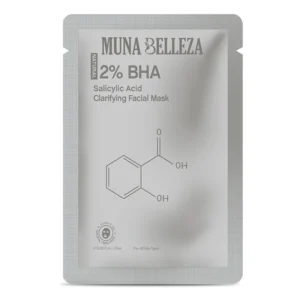 Salicylic Acid Face Mask
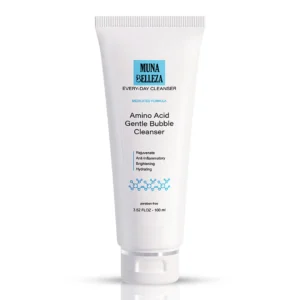 Amino Acid Gentle Bubble Cleanser
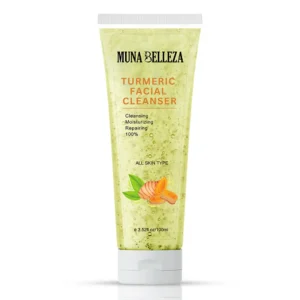 Turmeric Face Wash