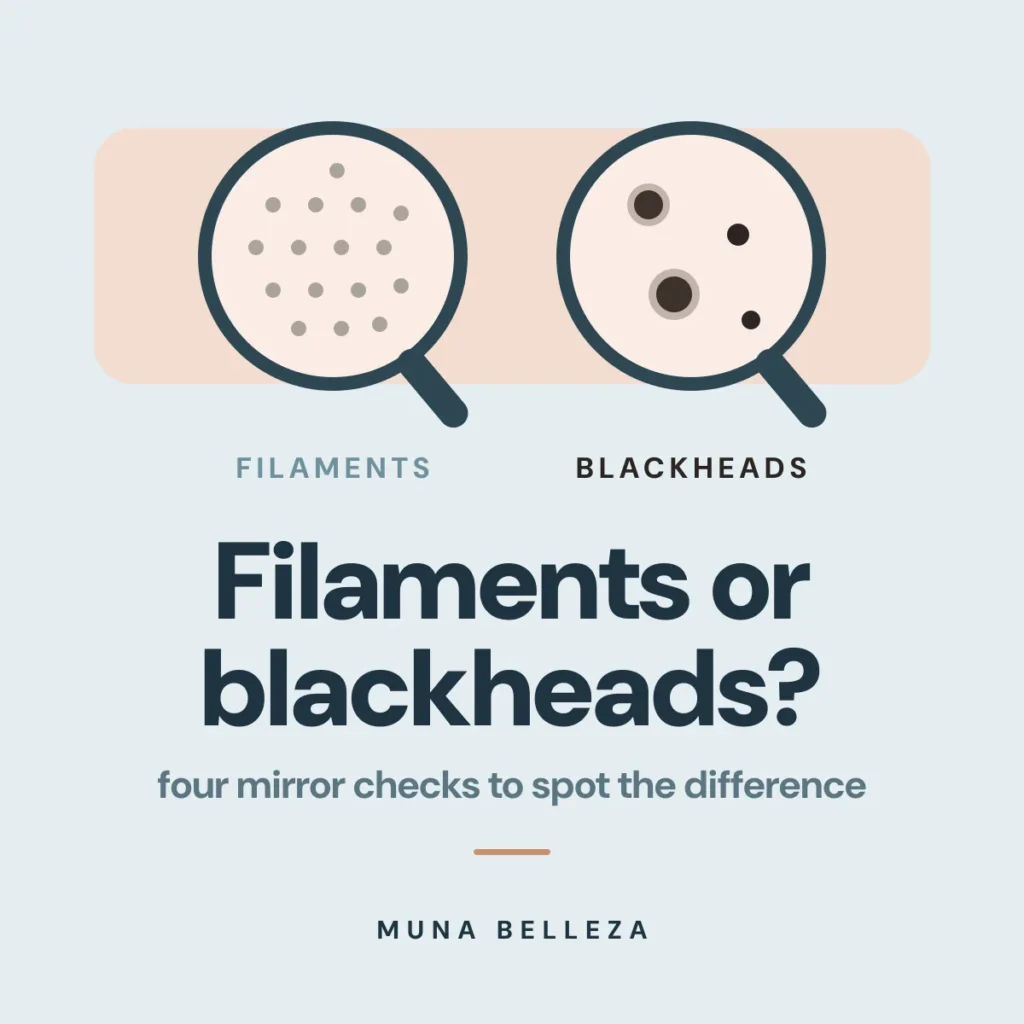
The most reliable way to get rid of blackheads on your nose is also the least dramatic: wash with a mild cleanser twice a day, use a salicylic acid product once or twice a week, and keep your fingers off the rest of the time. Salicylic acid dissolves in oil, so it can travel into the pore and loosen the plug from the inside. Squeezing only empties the top of the pore – the same spot refills within days, which is why nose blackheads can feel impossible to shift.
This guide covers why your nose collects more blackheads than anywhere else on your face, the weekly routine that clears them, and the habits that quietly undo the work.
Why the nose gets more blackheads than any other spot
Your nose sits in the middle of the T-zone, the strip of forehead, nose and chin where oil glands are at their largest and most crowded. Each pore there produces more sebum than a pore on your cheek, and more oil means more chances for a plug of oil and dead skin cells to form in the pore opening.
Once that plug reaches the air, it oxidizes and darkens, much like a cut apple browning on the counter. The black color is oxidized oil and skin pigment, not trapped dirt. That detail matters, because it explains why scrubbing harder never works: the plug sits inside the pore, below where any scrub can reach.
Weather plays a part too. In a humid summer, oil glands work harder and nose blackheads build faster. In a dry winter, or a heated or air-conditioned room, the surface of your skin dries and flakes while the pores underneath stay oily – and those extra dead cells feed new plugs. The routine below stays the same all year; only how rich your moisturizer is should change with the season.
First, check that they are actually blackheads
Look at your nose in daylight before you treat anything. A lot of what people try to remove from their nose is not blackheads at all.
| What you see on your nose | What it probably is | What helps |
|---|---|---|
| Scattered raised dark dots you can feel as small bumps | Blackheads | The routine below |
| A fine, even carpet of gray or sand-colored pinpoints in every pore | Sebaceous filaments – a normal part of the pore | The same ingredients make them look smaller, but they never fully go away |
| Small white bumps that stay closed under the skin | Whiteheads | Gentle exfoliation – see our whiteheads guide |
If the dots on your nose are uniform, flat and gray rather than black, read our guide to sebaceous filaments vs blackheads first – trying to squeeze them out is a losing game. If you are seeing closed white bumps as well, our whiteheads vs blackheads guide explains how the two differ. And for the basics of how these spots form in the first place, see What Are Blackheads?
How to get rid of blackheads on your nose, step by step
Step 1 – Wash twice a day, and stop there
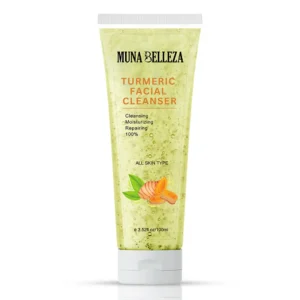
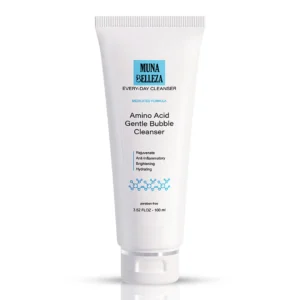
Use a mild cleanser morning and evening: lather for 30 to 60 seconds, rinse with lukewarm water, pat dry. If your nose is shiny again by midday, a wash for oily skin such as our Turmeric Face Wash makes sense. If your skin is normal, dry or easily irritated, a fragrance-free option like the Amino Acid Gentle Bubble Cleanser cleans without stripping. Washing a third or fourth time does not clear pores faster; it usually leaves skin tight and flaking, and flakes end up back in the pores.
Step 2 – Add salicylic acid once a week, then twice
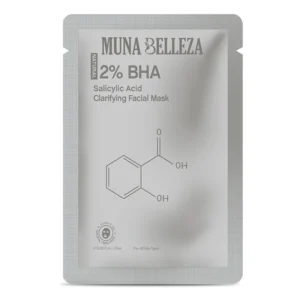
Salicylic acid is the one ingredient in this routine that works inside the pore. Our Salicylic Acid Face Mask is a 15-minute sheet mask with 2% BHA – press it firmly over your nose and chin, where the plugs sit. Start with once a week. If after two or three weeks your skin feels comfortable, move to twice a week on evenings a few days apart. Never use it two nights in a row, and skip it entirely on nights you use a retinoid, a scrub or another acid.
Step 3 – Moisturize, even if your nose is oily
This feels backwards, but skin that is stripped dry tends to answer with more oil. A light, oil-free moisturizer after every wash keeps the surface calm, so exfoliation can do its job without irritation.
Step 4 – Sunscreen every morning
Skin that is being exfoliated burns more easily. A broad-spectrum SPF 30 or higher is non-negotiable on mask weeks – and it protects the rest of your results too.
Step 5 – Leave your nose alone in between
No picking at the dots while you wait. Every squeeze sets the skin back further than one mask session moves it forward.
Your week at a glance
| When | What to do |
|---|---|
| Every morning | Cleanser, light moisturizer, sunscreen SPF 30 or higher |
| Every evening | Cleanser (twice if you wore sunscreen or makeup), light moisturizer |
| One evening a week | Salicylic acid mask for 15 minutes after cleansing, then moisturizer |
| After 2-3 weeks, if skin stays comfortable | Add a second mask evening, a few days after the first – never two nights in a row |
Why squeezing will not take blackheads off your nose for long
Pressing a blackhead out with your nails or a metal extraction tool feels productive, and for a day or two the pore does look clearer. Then the same gland keeps producing oil, the emptied pore refills, and the dot is back – usually within a week. What stays behind from the squeezing is the damage: broken capillaries on the sides of the nostrils, scabbing, a stretched pore opening and a route in for bacteria. Dermatologists at the American Academy of Dermatology advise against popping for exactly this reason – it can turn a harmless clogged pore into an inflamed spot.
Pore strips sit somewhere in the middle. They can lift the oxidized tops of the plugs, which is satisfying to look at, but they change nothing inside the pore, and on dry or sensitive skin they can take surface skin with them. If you enjoy them, keep them to once a week at most, and skip them when your skin is irritated. Our guide on whether you should pop pimples covers the squeezing question in more depth, and if you want extractions done properly, that is a job for a dermatologist or a trained esthetician, not a mirror and ten minutes of determination.
Habits that keep nose blackheads coming back
- Sleeping in sunscreen or makeup. Both are designed to stay put, which is exactly the problem at 2 a.m. Cleanse properly every evening, twice if you wore long-wear products.
- Heavy balms and oils on the T-zone. Rich creams belong on dry cheeks in winter, not on an oily nose. Keep the richest products away from the center of your face.
- Gritty scrubs every day. Scrubs polish the surface but cannot reach into the pore, and daily scrubbing leaves the nose red and flaking. Once a week is plenty, if at all.
- Skipping the wash after heavy sweat. After the gym, or a long day in humid heat, sweat and oil sit together on the nose. Rinse or cleanse as soon as you reasonably can.
- Resting your hands on your face. Oil, pressure and whatever your hands touched last – all pressed onto the T-zone for hours at a desk.
How long it takes to see a difference
With the mask once or twice a week and gentle cleansing daily, most people notice the dots on the nose looking smaller and shallower after three to four weeks. The American Academy of Dermatology suggests giving any blackhead routine six to eight weeks before judging it, so do not change course at day ten.
Two honest limits. First, this is maintenance, not a cure: your pores will keep producing oil for the rest of your life, so if you stop the routine, blackheads gradually return. Second, nothing – no mask, strip or wash – makes pores disappear or stops oil production. The realistic goal is clear pore openings and a smoother look, not glass.
When to see a dermatologist
- Nothing has changed after eight weeks of a consistent routine.
- Painful, swollen or deep bumps are appearing alongside the blackheads.
- Blackheads are widespread on your chest, back or shoulders, not just your nose.
- One dark spot is new, single, growing or changing – not every dark dot on the nose is a blackhead, and a changing spot should be looked at.
A dermatologist can prescribe a retinoid, do safe in-office extractions or suggest a chemical peel – options that go further than anything available over the counter.
Our picks for nose blackheads
No product on this list does anything dramatic overnight. Each one earns its place in the slow, steady routine above.
Salicylic Acid Face Mask
The core of this routine. Fifteen minutes on clean, dry skin, pressed well onto the nose and chin, one evening a week to start. Alongside the 2% BHA it carries witch hazel water and a small amount of glycolic acid, so treat it as your exfoliation for that week, not an extra on top of other acids. Not for very dry, sensitive or currently irritated skin. Shop the Salicylic Acid Face Mask
Turmeric Face Wash
A sulfate-free daily wash for skin that turns shiny by midday, with aloe and sodium hyaluronate so the clean does not come with that tight, squeaky feeling. It scents the water with tea tree leaf oil rather than added perfume. Shop the Turmeric Face Wash
Amino Acid Gentle Bubble Cleanser
A fragrance-free foam for normal, dry and sensitive skin, mild enough to sit alongside acid exfoliation. It will not clear blackheads on its own – its job is to clean twice a day without making anything worse. Shop the Amino Acid Gentle Bubble Cleanser
Common questions
Why do the blackheads on my nose come back so fast?
Because removing the plug does not switch off the gland underneath. The pores on a nose refill faster than anywhere else on the face, so clearing them is upkeep, like washing your hair, rather than a one-time fix.
Do pore strips work on nose blackheads?
For the look, briefly. A strip can pull out the dark tops of the plugs, but the pores refill within a week or two because nothing inside them has changed. Used occasionally on calm, non-sensitive skin they are fine; they are not a long-term answer.
Can I scrub blackheads away?
No. The plug sits inside the pore, below the reach of any scrub. Scrubbing makes the surface smoother for a day and often leaves the nose red; it does not empty a single pore.
Is a metal blackhead-removal tool safe to use at home?
We would leave it to professionals. The pressure that gets a plug out also bruises the surrounding skin, and on the nose – where skin is thin and capillaries sit close to the surface – the marks can outlast the blackhead by weeks.
Do blackheads mean my skin is dirty?
No. Blackheads form from your skin’s own oil and dead cells, and the dark color comes from oxidation, not dirt. Washing twice a day is enough; washing more often irritates skin without clearing a single pore.
If nose blackheads are your main concern, start with the Salicylic Acid Face Mask one evening a week, or browse everything for this concern on our blackheads and pores page.
This guide is for general education and is not medical advice. For painful, persistent or scarring breakouts, see a board-certified dermatologist.
 Salicylic Acid Face Mask
 Turmeric Face Wash
 Amino Acid Gentle Bubble Cleanser