 Gentle skincare for clear, even-looking skin
Before looking at how to improve skin elasticity, it helps to know what you are working with. Elasticity is your skin’s ability to stretch and spring back. It depends on two proteins in the deeper layer of the skin, collagen for firmness and elastin for bounce, and both decline slowly from early adulthood.
You cannot stop that process, and no cream rebuilds a twenty-year-old’s skin. What you can do is slow the loss considerably, support the collagen you still make and improve how firm skin looks and feels. This guide separates what has evidence from what is mostly marketing.
What is skin elasticity?
Skin elasticity is the quality that lets skin return to its shape after it is pinched, pulled or creased by an expression. Elastin fibers work like tiny rubber bands. Collagen fibers form the supporting framework around them. Together they sit in the dermis, the layer beneath the surface.
When both are plentiful and well organized, skin looks firm and smooth. As they thin and fragment, skin takes longer to bounce back, then begins to sag, crease and look crepey. Lines have their own guide: how to reduce wrinkles on your face. You see it first where skin is thin or moves most: under the eyes, along the jawline, on the neck and on the backs of the hands.
How can you check your own elasticity?
A simple pinch test gives a rough idea. Gently pinch the skin on the back of your hand, hold for five seconds and let go. Young, well-hydrated skin flattens almost instantly. Slower recovery is normal with age, and it also happens when you are dehydrated, so the test is a guide, not a measurement.
Why does skin lose elasticity?
Age
Collagen production drops by roughly one percent a year from your twenties. Elastin is made mostly early in life and is replaced very little in adults, which is why protecting it matters more than trying to replace it.
Sun exposure
Ultraviolet light is the largest avoidable cause. It breaks down collagen and damages elastin so that the fibers clump into a disorganized mass. Dermatologists attribute most visible skin aging on the face to the sun.
Hormones
Estrogen supports collagen. According to the American Academy of Dermatology, women lose about 30 percent of their skin’s collagen in the first five years of menopause, which explains why firmness can change quickly around that time.
Smoking and pollution
Smoke and polluted air generate free radicals that damage collagen and elastin, and smoking also narrows the blood vessels that feed the skin.
Weight changes and sleep
Rapid or repeated weight loss stretches the skin’s support. Poor sleep and long-term stress slow repair.
How do you improve skin elasticity day to day?
If you are wondering how do you improve skin elasticity without procedures, these are the habits with the best evidence, in order of importance.
1. Wear sunscreen every day
Daily broad-spectrum SPF 30 or higher is the single most effective step. It protects the elastin you cannot regrow and the collagen you are still making. Add shade, a hat and sunglasses when the sun is strong. We do not make a sunscreen, so choose one you like enough to wear daily.
2. Use a retinoid at night
Retinoids are the best-studied topical ingredient for firmness. Prescription tretinoin, and to a lesser degree over-the-counter retinol, stimulate new collagen and slow its breakdown. Results take three to six months. Start two nights a week, moisturize well and avoid them during pregnancy and breastfeeding. We do not sell a retinoid.
3. Add vitamin C in the morning
Vitamin C is needed to make collagen, and as an antioxidant it helps neutralize the free radicals from sun and pollution. We explain forms and strengths in vitamin C serum benefits. Our Double Vitamin C Serum combines ascorbic acid with hyaluronic acid. We do not publish its exact percentage, so think of it as daily antioxidant support, not a clinical-strength treatment.
4. Keep skin hydrated
Hydration does not rebuild elastin, but well-moisturized skin is plumper and springs back better, so it looks firmer straight away. Humectants such as hyaluronic acid and glycerin are the most useful.
5. Consider peptides
Peptides are short chains of amino acids that may signal skin to make more collagen. The research is promising but mixed, and it varies by peptide. Treat them as a possible extra after the steps above.
Does collagen in skincare help?
This is where honesty matters. Collagen molecules in creams and masks are too large to pass into the dermis, so they cannot replace the collagen you have lost. What they do well is hold water at the surface, which leaves skin soft and smooth for a while.
Our Collagen Face Mask works in exactly that way. It is a hydrating treatment that makes skin feel plump and comfortable, and it contains centella. It is scented, and it is not a substitute for sunscreen or a retinoid. You can see how the ingredient is used across our range in collagen skincare.
Do collagen supplements work?
Possibly, a little. A 2021 review of 19 studies with more than 1,100 participants found that hydrolyzed collagen taken by mouth for about 90 days improved measures of skin elasticity and hydration. The limits are worth knowing: many of the studies were small or funded by supplement makers, products varied, and the improvements were modest. Supplements are optional, and they do not replace sun protection.
Which lifestyle habits make a difference?
- Do not smoke. Stopping at any age helps the skin’s blood supply recover.
- Eat enough protein, plus fruit and vegetables rich in vitamin C, which your body needs to build collagen.
- Limit sugar. High blood sugar stiffens collagen fibers through a process called glycation.
- Exercise regularly. It improves circulation, and some studies link it to healthier skin structure.
- Sleep seven to nine hours. Repair happens overnight.
- Drink sensibly. Alcohol dehydrates the skin.
How to increase skin elasticity with professional treatments
When people ask how to increase skin elasticity beyond what skincare can do, in-office treatments are the answer. They work by creating controlled stress in the dermis, which triggers new collagen and, to a smaller extent, elastin.
- Microneedling, with or without radiofrequency
- Fractional and other resurfacing lasers
- Focused ultrasound for the lower face and neck
- Chemical peels of medium depth
- Injectable biostimulators and fillers, which restore lost volume
Results build over months, and most treatments need repeating. Choose a board-certified dermatologist, and ask what improvement is realistic for your skin.
Does facial massage or exercise help?
Massage increases blood flow and can reduce puffiness, so the face looks fresher for a few hours. There is little good evidence that it rebuilds elastin. It does no harm if you use light pressure and a moisturizer so the skin is not dragged.
How long before you notice a difference?
Hydration shows the same day. Vitamin C and consistent sunscreen show in the tone and brightness of skin within two to three months. Retinoids and procedures act on collagen, so allow three to six months, with gains continuing for a year.
Is it ever too late to start?
No. Skin responds to protection at any age. People who begin daily sunscreen in their fifties and sixties still see less new damage, and retinoids improve sun-damaged skin in older adults too. The earlier you start, the more you keep.
How to improve skin elasticity: where to begin
If you want one plan for how to improve skin elasticity, make it this: sunscreen every morning, a retinoid at night, vitamin C if you like, and a moisturizer that keeps skin comfortable. Everything else is a refinement. You can browse our picks for fine lines and wrinkles.
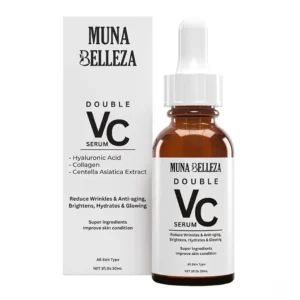 Double Vitamin C Serum
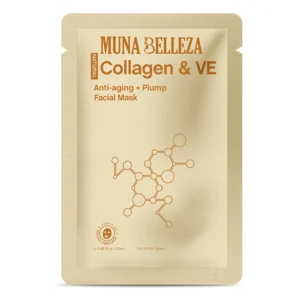 Collagen Face Mask
 Day and Night Cream Set
Pingback: How to Reduce Wrinkles on Your Face: An Honest Guide
Pingback: Collagen Face Mask Benefits: Do They Really Work?