 Gentle skincare for clear, even-looking skin
Chemical exfoliation sounds harsher than it is. It means using mild acids or enzymes to loosen the dead cells on the surface of your skin so they shed evenly, instead of rubbing them off with a scrub. Done well, it is gentler than physical scrubbing and gives a smoother, brighter surface.
Done badly, it is also the fastest way to irritate your face. The difference comes down to choosing the right type for your skin and starting slowly. This guide explains how these products work, what separates AHA from BHA, how often to use them and what to avoid.
What is chemical exfoliation?
Your skin sheds its outermost cells constantly, replacing the surface roughly every four weeks. With age, sun damage, oiliness or dryness, that shedding becomes uneven. Old cells cling on, and the skin looks dull and feels rough, while pores clog more easily.
Exfoliation speeds the process up. Dermatologists describe two methods. Mechanical exfoliation uses a tool or a scrub to remove cells physically. Chemical exfoliation uses ingredients such as alpha and beta hydroxy acids to dissolve the material holding dead cells in place.
How does it work? The chemistry of exfoliation
The chemistry of exfoliation is easy to picture. Dead cells in the outer layer are held together by protein links and a fatty “glue”. Exfoliating acids weaken those links, so the cells let go and rinse or flake away on their own schedule over the next few days.
Two properties decide how an acid behaves.
- What it dissolves in. Water-soluble acids work on the surface. Oil-soluble acids can travel into pores.
- Molecule size. Smaller molecules sink in faster and act more strongly, and they irritate more easily. Larger ones work slowly and gently.
The strength on the label and the product’s pH matter as well, which is why two products with the same acid can feel very different.
What are the main types?
AHAs, or alpha hydroxy acids
AHAs are water-soluble and work on the skin’s surface. They smooth rough texture, brighten dullness and help fade uneven tone.
- Glycolic acid has the smallest molecule, so it is the most effective and the most likely to sting.
- Lactic acid is gentler and also attracts water, which suits dry skin.
- Mandelic acid has a larger molecule and is the mildest of the three. It is often suggested for sensitive skin and deeper skin tones.
BHA, or beta hydroxy acid
In skincare, BHA means salicylic acid. It is oil-soluble, so it works inside the pore as well as on the surface, loosening the mix of oil and dead cells that causes blackheads and breakouts. It also has a calming effect on inflamed spots. We cover it in depth in salicylic acid for skin.
PHAs, or polyhydroxy acids
Gluconolactone and lactobionic acid are newer relatives of AHAs with much larger molecules. They work at the very surface, cause little irritation and hold moisture, which makes them a good starting point for reactive skin.
Enzymes
Fruit-derived enzymes such as papain and bromelain break down surface proteins. They are mild and usually come in wash-off masks.
AHA or BHA: which should you choose?
Let your skin type decide.
- Oily, blackhead-prone or acne-prone skin: BHA
- Dry, dull or sun-damaged skin: an AHA, with lactic acid as the gentle option
- Combination skin: BHA on the T-zone, or a product that pairs a low-strength AHA with BHA
- Sensitive skin or a first attempt: a PHA or mandelic acid
- Deeper skin tones: gentler options, introduced slowly. Dermatologists caution that aggressive exfoliation can leave dark marks on darker skin.
If texture is your main concern, our guide to skin texture helps you work out what is causing it.
What strength should you use?
For home use, more is not better. As a general guide, look for an AHA at 10 percent or less and a BHA at 1 to 2 percent. Beginners can start lower, around 5 percent for an AHA and 0.5 to 1 percent for a BHA.
Very strong peels are a different matter. In 2024 the U.S. Food and Drug Administration warned consumers against buying high-concentration chemical peel products for home use, because they can cause chemical burns, swelling and lasting changes in skin color. Peels of that strength belong in a dermatologist’s office.
How do you start safely?
- Patch test first. Apply a little behind your ear or along your jaw, and wait 24 hours.
- Use it at night, on clean, dry skin.
- Begin once a week. After two weeks without irritation, move to twice a week. Most people never need more than two or three times a week.
- Follow the label. Leave-on products stay on. Masks and peel pads have a time limit, and exceeding it does not improve the result.
- Moisturize afterward.
- Wear sunscreen every morning. AHAs make skin more sensitive to ultraviolet light, and that sensitivity lasts for about a week after you stop. We do not make a sunscreen.
- Change nothing else in your routine for the first month.
A mild tingle that fades within a minute is normal. Burning, lasting redness or peeling is not.
What should you not combine it with?
- Another exfoliant on the same day, including scrubs, brushes and peel pads
- Retinoids on the same night, at least until your skin is used to both. Alternate nights.
- Benzoyl peroxide in the same step
- Waxing, threading or shaving on the same day
- Strong vitamin C serums in the same routine if your skin is sensitive. Use vitamin C in the morning and the exfoliant at night.
Niacinamide, hyaluronic acid, ceramides and plain moisturizers are all fine alongside it.
How do you know if you have overdone it?
Over-exfoliation is common, and the early signs are easy to miss.
- Stinging when you apply products that never used to sting
- Tightness and a shiny, almost waxy look
- Redness, flaking or peeling
- New sensitivity to the sun and to heat
- More breakouts, not fewer
If this happens, stop every exfoliant and active, and use only a gentle cleanser, moisturizer and sunscreen until your skin feels normal, which can take two to four weeks. Our guide to the skin barrier walks through recovery.
Is a washcloth for face exfoliation a good idea?
A washcloth for face exfoliation is the simplest form of mechanical exfoliation, and for some people it is enough. A soft, clean cloth used with light pressure once or twice a week can lift loose flakes.
It has limits. It cannot reach into pores, pressure is hard to judge and a rough or damp, reused cloth can irritate skin and spread bacteria. Dermatologists advise people with acne to wash with their fingertips, because cloths and sponges can aggravate breakouts. If you like using one, choose a soft cloth, use a fresh one each time and do not use it on days you apply an acid.
Who should be careful or avoid it?
- Anyone with eczema, rosacea, psoriasis or a damaged skin barrier
- Skin that is sunburned, broken or freshly waxed
- People using prescription retinoids or other medicines that make skin more sensitive
- Anyone allergic to aspirin, who should avoid salicylic acid
- During pregnancy, it is sensible to check with your doctor. Low-strength lactic and glycolic acid are generally considered acceptable, while high-dose salicylic acid is usually avoided.
How does exfoliation for your face fit into a routine?
Exfoliation for your face belongs in the evening, after cleansing and before moisturizer, in place of your other active on that night. A simple week might look like this.
- Two nights: exfoliant
- Two or three nights: retinoid, if you use one
- Remaining nights: cleanser and moisturizer only
A wash-off treatment is an easy way to begin, because contact time is short. Our Salicylic Acid Face Mask combines 2 percent salicylic acid with glycolic acid, so it gives you BHA and AHA together in 15 minutes, once or twice a week. It contains fragrance, and it is not suitable for anyone allergic to aspirin.
On the nights between, keep things soothing. Our Aloe Vera Face Mask Sheet contains no exfoliating acids. It is scented.
How long before you see results?
Skin often feels smoother after the first one or two uses. Brighter, more even-looking skin takes four to six weeks, and clogged pores and marks take eight to twelve. If nothing has changed by then, the answer is rarely a stronger acid. See a dermatologist, who can assess whether exfoliation is right for your skin and offer professional peels where appropriate. For the wider picture, see how to get glowing skin, and browse our face masks.
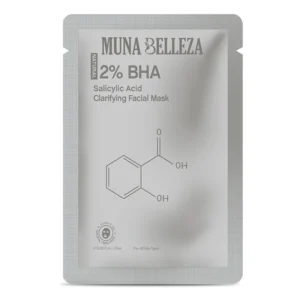 Salicylic Acid Face Mask
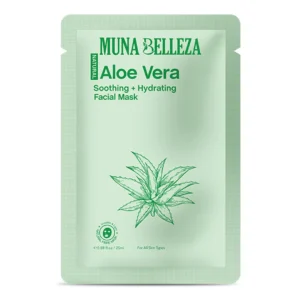 Aloe Vera Face Mask Sheet
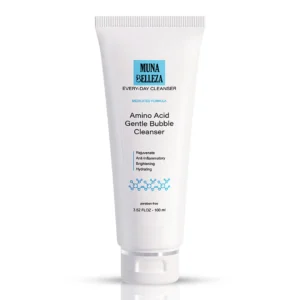 Amino Acid Gentle Bubble Cleanser
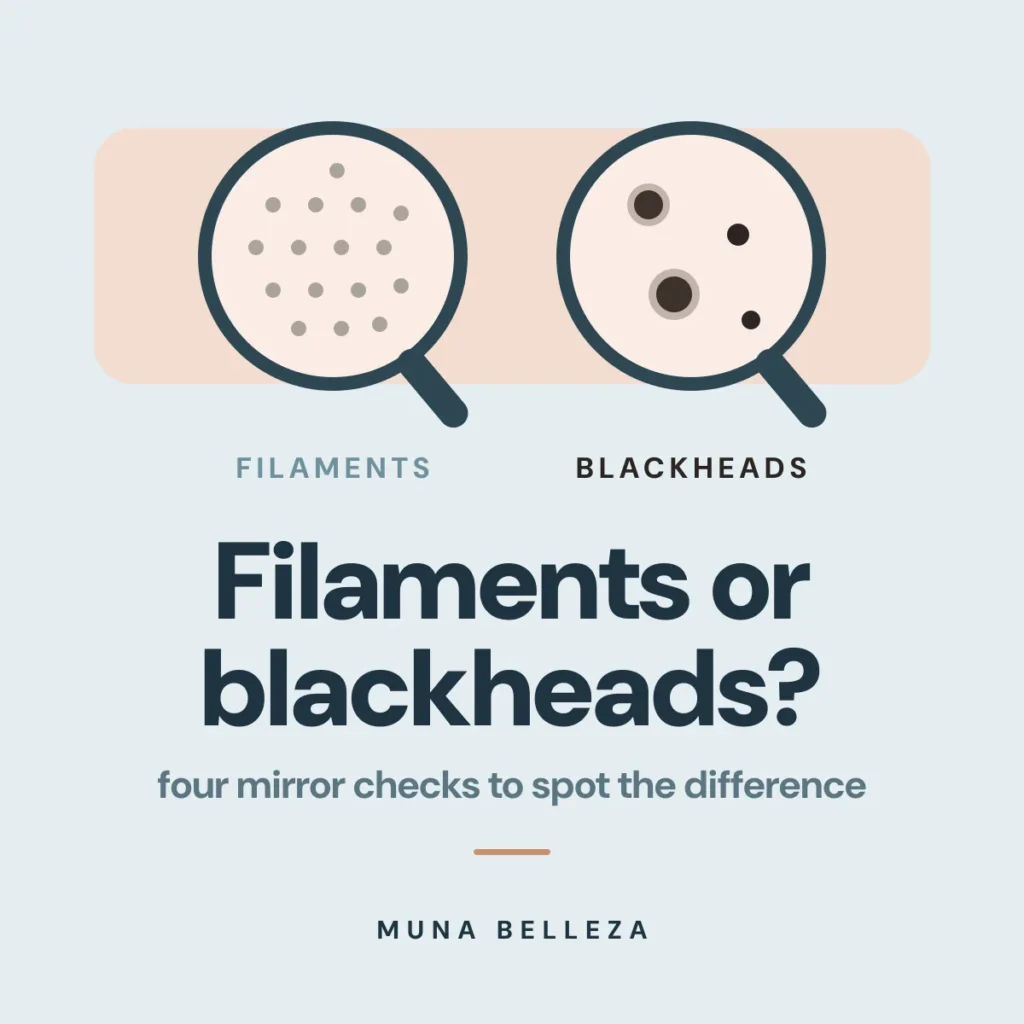
Pingback: Skin Texture: What Causes Bumps and How to Smooth Them
Pingback: How to Get Glowing Skin: 9 Habits That Work