 Gentle skincare for clear, even-looking skin
The real collagen face mask benefits are hydration, a plumper-looking surface and smoother, more comfortable skin for a day or so. What a collagen mask cannot do is add collagen to your skin or rebuild the collagen you have lost. Both statements are true, and knowing the difference tells you exactly when one of these masks is worth using.
We sell a collagen mask, so we have every reason to oversell it. We would rather explain what the science supports. This guide covers how these masks work, what they do well, where the limits are and how to get the most from one.
What is a collagen face mask?
A collagen face mask is a mask that lists collagen, usually hydrolyzed collagen, among its ingredients. Collagen itself is the main structural protein in skin. It forms the framework in the deeper layer, the dermis, that keeps skin firm.
The masks come in a few forms.
- Sheet masks: a fiber sheet soaked in a watery essence
- Hydrogel masks: a jelly-like sheet that hugs the face and holds more liquid
- Cream and sleeping masks: leave-on formulas applied like a thick moisturizer
- Under-eye patches: small hydrogel pads for the eye area
In all of them, collagen is one ingredient among many, alongside humectants such as glycerin and hyaluronic acid.
Can collagen from a mask get into your skin?
Not in any way that replaces your own. The outer layer of skin is built to keep large molecules out. Researchers use a rough guide called the 500 Dalton rule: substances much heavier than that struggle to pass through healthy skin. Natural collagen is hundreds of times larger.
Hydrolyzed collagen has been broken into smaller fragments, called peptides, and some are small enough to reach the upper layers. Even so, there is no good evidence that collagen applied to the surface becomes part of the collagen framework in the dermis. New collagen is made by your own cells.
So when a mask promises to “replenish” or “restore” collagen, it is describing the name of an ingredient, not what happens in your skin.
What are the real collagen mask benefits?
The genuine collagen mask benefits come from what collagen is good at on the surface, and from the way a mask is used.
Deep surface hydration
Collagen and its peptides are excellent at holding water. They sit on the skin as a light, moisture-binding film. Combined with glycerin and hyaluronic acid, they raise the water content of the outer layer noticeably.
A plumper, smoother look
Well-hydrated skin swells slightly, so fine dehydration lines soften and the surface looks fuller and more even. This is the “plumping” effect people notice, and it is real, although it lasts hours to a day or two.
Better absorption from the mask format
A sheet or hydrogel pressed against the face stops the essence from evaporating, so the skin has 15 to 20 minutes of uninterrupted contact with it. That occlusion is a large part of why any mask feels more effective than the same liquid patted on.
A softer surface for makeup
Skin that is hydrated and smooth takes foundation more evenly, which is why masks are popular before events.
Comfort
Many formulas include soothing ingredients, so skin that feels tight from air conditioning, travel or sun often feels calmer afterward.
What can a collagen mask not do?
- It cannot rebuild lost collagen or increase firmness in a lasting way.
- It cannot erase wrinkles. It can make fine lines look softer for a while.
- It cannot lift or tighten sagging skin.
- It cannot replace sunscreen, which protects the collagen you already have.
- It cannot replace a retinoid, which is the best-proven topical ingredient for stimulating collagen.
If firmness is your goal, our guide on how to improve skin elasticity explains what does work. For lines, see how to reduce wrinkles on your face.
Do the other ingredients matter more than the collagen?
Often, yes. When you choose a collagen mask, read the rest of the list.
- Glycerin and hyaluronic acid do most of the hydrating.
- Beta-glucan and panthenol soothe and help skin hold moisture.
- Centella asiatica calms. We cover it in centella asiatica for skin.
- Peptides, such as acetyl hexapeptide-8, are included for a smoother look. The evidence for them is modest.
- Fragrance and alcohol are worth noting if your skin is sensitive.
A mask with a good humectant base and little collagen will hydrate well. A mask with collagen and a poor base will not.
What is in our Collagen Face Mask?
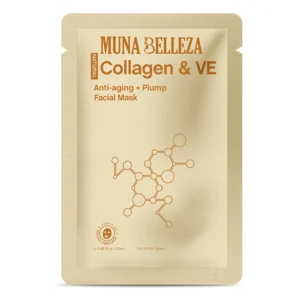
Our Collagen Face Mask is a sheet mask. Glycerin and beta-glucan are the second and third ingredients after water, followed by centella and other plant extracts, panthenol, acetyl hexapeptide-8, sodium hyaluronate and hydrolyzed collagen.
Here is what you should know before buying.
- It is a hydration mask. It makes skin feel softer and look plumper and more rested for the evening. It does not add collagen to your skin.
- It is free from exfoliating acids and oils.
- It contains fragrance and soybean seed extract.
- It contains a small amount of retinyl palmitate, a mild vitamin A derivative. For that reason we suggest using it in the evening, wearing sunscreen the next day and asking your doctor first if you are pregnant.
How do you use a collagen mask?
- Cleanse, and pat your face until it is just damp.
- Unfold the mask, and line it up with your eyes and mouth. Smooth it outward from the center so there are no air pockets.
- Leave it on for 15 minutes, or for the time stated on the pack.
- Remove it, starting from the chin, and press the remaining essence into your face and neck. There is no need to rinse.
- Follow with moisturizer. This step matters, because it seals in the water the mask has added. Without it, much of that hydration evaporates.
Take the mask off while it is still moist. Once a sheet begins to dry, it stops helping and can start drawing moisture back out of the skin.
Can you wear a collagen mask overnight?
It depends on the type. A collagen mask overnight is fine if the product is designed for it. Cream-style sleeping masks and some hydrogel masks that are labeled for overnight wear are made to stay moist and are safe to leave on.
A standard sheet mask should not be worn overnight. It dries out within 20 to 30 minutes, after which it can leave skin tighter than before, and long contact with fragrance or preservatives raises the chance of irritation. Sleeping in one also traps heat, which acne-prone skin dislikes. If you want an overnight effect, use the sheet mask for its 15 minutes and then apply a good moisturizer on top.
How often should you use one?
Two or three times a week suits most people. Very dry skin can use a hydrating mask more often, and sensitive skin should start with once a week. Daily use is rarely necessary, and the benefit levels off. For masking in general, including side effects, see sheet mask benefits.
Are there side effects?
Collagen masks are generally gentle, but a few things can go wrong.
- Irritation or redness, usually from fragrance, preservatives or plant extracts
- Breakouts in acne-prone skin, if the formula is rich or the mask is left on too long
- Allergic reactions. Many collagen ingredients come from fish or other animal sources, so check the label if you have allergies or follow a vegan or halal lifestyle and want to confirm the source.
- Stinging on skin that is sunburned or over-exfoliated
Patch test a new mask on your jawline, and stop using it if your skin burns or itches.
Collagen mask, supplement or retinoid?
They do different jobs.
- A collagen mask hydrates the surface. The effect is immediate and short-lived.
- Collagen supplements are taken by mouth. A 2021 review of 19 studies found modest improvements in skin hydration and elasticity after about three months, with the caveat that many of the studies were small or funded by manufacturers.
- Retinoids and daily sunscreen act on collagen itself, by stimulating new production and preventing breakdown. They take months and give the most lasting change.
A sensible approach uses sunscreen and a retinoid as the foundation, and a mask for comfort and a quick boost.
Collagen face mask benefits: are they worth it?
They work for what they are: a pleasant, effective way to hydrate skin and make it look fresher for a day. Judged as a collagen replacement, they do not work, and nothing applied to the surface does. If you enjoy the ritual and like how your skin looks afterward, a collagen mask is a worthwhile part of a routine. You can see how the ingredient is used across our range in collagen skincare, and compare our face masks.
 Collagen Face Mask
 Aloe Vera Face Mask Sheet
 Day and Night Cream Set