 Gentle skincare for clear, even-looking skin
Centella asiatica for skin is a calming ingredient. Often called cica, it helps soothe redness and irritation, supports the skin’s moisture barrier and leaves stressed skin feeling more comfortable. It is a good fit for sensitive, dry or over-treated skin.
It has centuries of traditional use behind it and a growing body of modern research, though not every claim made for it is proven. Here is what centella does, what the studies actually show, who it suits and how to add it to a routine.
Centella asiatica for skin: what is it?
Centella asiatica is a small, leafy herb that grows in wet areas of Asia and has long been used in traditional medicine there. You may also know it as gotu kola, Indian pennywort or tiger grass. The last name comes from the old story that injured tigers rolled in the plant.
“Cica” is simply a short name for it, borrowed from a French pharmacy cream. A product called a cica cream contains centella or one of its key compounds.
What is in it?
The plant’s main active compounds are four related substances: asiaticoside, madecassoside, asiatic acid and madecassic acid. On ingredient lists, you may see the whole extract, listed as centella asiatica extract, or one of these compounds by name. Madecassoside and asiaticoside are the ones most often used alone.
What does centella asiatica do for skin?
It calms irritation
Centella has anti-inflammatory activity in laboratory studies and in small human trials. In one study, creams and gels containing centella extract reduced experimentally caused redness on the skin.
It supports hydration and the barrier
The same study found that centella formulas increased the water content of the skin’s surface and reduced the amount of water escaping through it. A stronger barrier makes skin less reactive over time.
It works as an antioxidant
Centella’s compounds help neutralize free radicals, the unstable molecules created by sun and pollution.
It may support firmer-looking skin
Centella compounds encourage collagen production in laboratory studies. In one six-month trial, a cream combining 5% vitamin C with 0.1% madecassoside improved firmness, hydration and the look of wrinkles in sun-aged skin. Because the cream contained both ingredients, it is not possible to say how much of the effect was due to centella.
Does centella asiatica help with acne?
It may help the skin around acne, though it is not an acne treatment. Centella does not unclog pores or reduce oil. What it can do is calm the redness around spots and help the skin cope with drying acne products such as salicylic acid, benzoyl peroxide and retinoids.
That supporting role is valuable. Many people stop effective acne products because their skin becomes sore, and a calming, hydrating layer can make the difference. Our guide to what salicylic acid does covers the pore-clearing side.
Does cica erase scars?
No. This is the claim to be careful with. Centella has a long history in wound care, and there is laboratory evidence that its compounds support the skin’s repair process. That is not the same as removing a scar that has already formed, and no cosmetic cream can do that.
For the flat marks left after spots, time, sunscreen and tone-evening ingredients such as niacinamide are more useful. Raised or indented scars need a dermatologist.
Is centella asiatica good for sensitive skin?
Yes. This is where it is most at home. It is mild, it is not an exfoliant, and it does not make skin more sensitive to the sun.
It is particularly useful when your skin barrier is under strain:
- after too much exfoliating or a harsh cleanser
- while starting a retinoid or an acne treatment
- in cold, dry or windy weather
- after shaving
- when skin feels hot, tight or blotchy for no obvious reason
If your skin reacts easily, our picks for sensitive skin are a good starting point.
Is cica the same in every product?
No, and the label does not tell you much. A product can use whole centella extract, centella leaf water, or purified compounds such as madecassoside, and the amount can range from a trace to a meaningful dose. Brands rarely state the percentage.
The position on the ingredient list is the best clue you have. Higher up means more. A product with centella near the end of a long list contains very little, whatever the front of the pack says.
How do you use centella asiatica?
It is simple to use, and it fits anywhere.
- Use it morning, night or both.
- Apply serums and essences after cleansing, and creams as your moisturizer step.
- Use sheet masks once or twice a week, or whenever skin feels stressed.
- Finish with sunscreen in the morning. Centella gives no sun protection.
There is no need to build up slowly, and there is no upper limit on frequency.
What can you pair it with?
Everything. Centella has no known conflicts with other skincare ingredients. It is often paired with:
- glycerin, hyaluronic acid and panthenol, for hydration and comfort
- niacinamide, for the barrier and uneven tone
- vitamin C, as in the study above
- retinoids and exfoliating acids, to make them easier to tolerate
For more on its usual partners, see our guides to panthenol and niacinamide.
How long does centella take to work?
The soothing feeling can be immediate, particularly from a cool sheet mask. Lasting changes in hydration and barrier strength take two to four weeks of regular use. Any effect on firmness, where it happens, takes months.
Who should be careful with centella?
Centella is very well tolerated, but allergic reactions have been reported, as with any plant extract. They are rare. Patch test a new product on your inner arm for a day or two if you have a history of plant allergies or very reactive skin.
Stop using it if you notice a new rash, itching or swelling. And remember that a reaction to a cica product may be caused by fragrance or another ingredient, not the centella.
Which of our products contain centella asiatica?
Three do.
In our Aloe Vera Face Mask Sheet, centella is sixth on the ingredient list, after glycerin and beta-glucan, together with ectoin, panthenol and hyaluronic acid. It is a 15-minute calming, hydrating mask. It contains fragrance.
In the Collagen Face Mask, centella is fifth on the list, alongside glycerin, beta-glucan and allantoin. It contains fragrance, soy and a vitamin A derivative, so it is not our pick for very reactive skin or for use during pregnancy.
In the Double Vitamin C Serum, centella sits thirteenth, supporting vitamin C and hyaluronic acid in a daily morning serum with no added fragrance or oils.
Both masks are also in our Face Mask Sheets pack, if you would like to try them alongside three others.
When should you see a dermatologist?
See a dermatologist if redness, burning or flaking lasts for more than a few weeks, if your skin reacts to most products, or if you have a rash that keeps returning. Ongoing sensitivity can be a sign of rosacea, eczema or a contact allergy, and each needs its own approach.
Can you use centella asiatica every day?
Yes. It is gentle enough for daily use, twice a day, all year round, and regular use is how you get the barrier benefits.
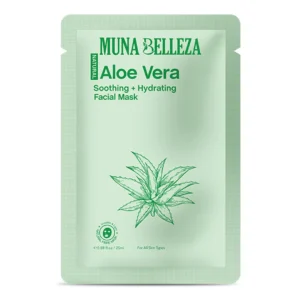 Aloe Vera Face Mask Sheet
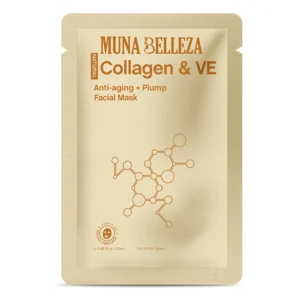 Collagen Face Mask
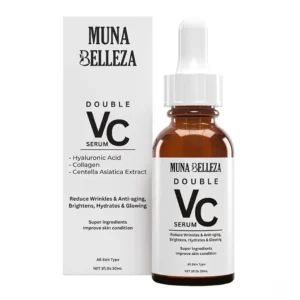 Double Vitamin C Serum
Pingback: Collagen Face Mask Benefits: Do They Really Work?