 Gentle skincare for clear, even-looking skin
The main sheet mask benefits are quick, concentrated hydration and calmer, smoother-looking skin, delivered in about 15 minutes with almost no effort. They are among the easiest skincare steps to enjoy, and for dry or tired skin the difference shows the same evening.
They also have limits and a few possible downsides, which packaging rarely mentions. This guide gives you the full picture: how sheet masks work, what they do well, the side effects to watch for, how often to use one and what to do after you take it off.
What is a sheet mask?
A sheet mask is a face-shaped piece of material soaked in a liquid essence or serum. You place it on clean skin, leave it for a set time and then remove it. Most are single-use.
The sheet itself can be made of several materials.
- Cotton or other soft fibers, the most common and affordable
- Bio-cellulose, a fine natural fiber that clings closely to the skin
- Hydrogel, a jelly-like sheet that holds a lot of liquid and feels cool
The essence usually contains water, humectants such as glycerin and hyaluronic acid, and one or two featured ingredients, for example aloe, niacinamide, collagen or salicylic acid.
How do sheet masks work?
They work through occlusion. The damp sheet forms a temporary cover over your face, which stops the essence from evaporating and keeps it in contact with the skin for the full wearing time. Under that cover, water loss from the skin drops and the outer layer takes up more moisture than it would if you patted the same liquid on by hand.
It is the same principle as putting cling film over a hand cream, in a gentler and more comfortable form. Dermatology researchers describe the effect as real but temporary, which is the fairest summary of sheet masks in general.
What are the sheet mask benefits for skin?
These are the sheet mask benefits for skin that hold up.
Fast, deep-feeling hydration
The combination of humectants and occlusion raises the water content of the outer layer quickly. Skin feels softer and looks plumper, and fine dehydration lines are less visible for a day or so.
Soothing
The cool, wet sheet lowers surface temperature, which eases the tight, warm feeling after sun, wind, travel or long hours in air conditioning. Ingredients such as aloe, centella and panthenol add to that. We look at the first of these in aloe vera benefits for skin.
Better contact with active ingredients
Because the essence stays put, water-soluble ingredients such as niacinamide or vitamin C derivatives have longer to work than they do in a product that dries in seconds.
A smoother base for makeup
Hydrated skin takes foundation more evenly, which is why a mask the evening before, or a few hours ahead of an event, is popular.
Convenience and hygiene
Each mask is a single, sealed dose. There is nothing to measure or mix and no jar to contaminate with your fingers.
A reason to stop
Fifteen minutes lying still is good for you. Stress shows on the skin, and a small ritual you enjoy is easier to keep up than a complicated routine.
What can sheet masks not do?
- The effects last hours to a couple of days, not weeks.
- They do not replace a cleanser, moisturizer or sunscreen.
- They cannot erase wrinkles, shrink pores or rebuild collagen. We explain that last point in do collagen face masks work.
- A mask cannot fix skin that is irritated by the rest of your routine.
Think of a sheet mask as a boost on top of a good routine, not a substitute for one.
What are the sheet mask benefits and side effects to weigh up?
Looking at sheet mask benefits and side effects together gives a balanced view. Most people have no problems, but these are the issues that do come up.
Irritation or allergy
Fragrance, preservatives and plant extracts are the usual causes. Because the essence is held against the skin, a reaction can be stronger than with a product you rub in. Signs are stinging that does not fade, redness, itching or small bumps.
Breakouts
Rich or heavily scented formulas, or leaving a mask on too long, can clog pores in acne-prone skin. Warmth and moisture trapped under a sheet also suit the bacteria involved in breakouts.
Over-hydration
Longer is not better. Skin that stays wet for too long swells and its barrier weakens, a little like fingertips after a long bath. Research on prolonged wear suggests it can be counterproductive, which is one reason overnight sheet masking is not advised.
Dryness afterward
If a sheet is left on until it dries, it can pull moisture back out of the skin. Skipping moisturizer afterward has a similar result, as the added water evaporates.
Stinging on compromised skin
Sunburned, freshly shaved, over-exfoliated or eczema-prone skin lets more through and reacts more easily.
Too much of an active
Masks containing acids or vitamin A derivatives count toward your weekly total of those ingredients. Used on top of an existing exfoliant or retinoid, they can tip skin into irritation.
How often should you use a sheet mask?
It depends on what is in it.
- Hydrating and soothing masks: two or three times a week suits most people. Very dry skin can use them more often.
- Masks with exfoliating acids, retinoids or strong brightening actives: once a week, and not on the same day as other exfoliants.
- Sensitive skin: start with once a week, whatever the type.
Daily masking is rarely needed. The benefit levels off, and the cost and waste add up.
How do you use one properly?
- Cleanse first. A mask on unwashed skin seals in oil and dirt.
- Apply the mask to slightly damp skin, lining up the eyes and mouth, and smooth out air bubbles.
- Leave it on for the time on the pack, usually 15 to 20 minutes. Set a timer.
- Remove it while it is still moist.
- Pat the remaining essence into your face, neck and the backs of your hands. Do not rinse, unless the instructions say to. Exfoliating masks are often the exception.
- Throw the sheet away. Do not reuse it.
What should you do after a sheet mask?
Apply moisturizer within a minute or two. This is the step people skip, and it is what makes the result last, because a cream seals in the water the mask has added. If it is morning, finish with sunscreen. If it is evening, you can go straight to bed. There is no need to add serums afterward, since the essence has done that job.
Which mask suits which need?
Match the mask to what your skin is asking for that day.
- Tight, dry or irritated skin: a simple hydrating mask. Our Aloe Vera Face Mask Sheet is built on glycerin, beta-glucan, centella and ectoin, with no exfoliating acids. It contains fragrance.
- Flat, tired-looking skin: a plumping, hydrating mask. Our Collagen Face Mask pairs humectants with hydrolyzed collagen and a peptide. It is scented and contains a small amount of a vitamin A derivative, so use it in the evening, and ask your doctor first if you are pregnant.
- Marks and uneven tone: our Turmeric Face Mask Sheet contains niacinamide, tranexamic acid and alpha arbutin, with no added fragrance.
- Oily skin and clogged pores: our Salicylic Acid Face Mask has 2 percent salicylic acid. It is the one you rinse off, and the one to limit to once or twice a week. It is not for anyone allergic to aspirin. Our guide to chemical exfoliation explains why.
If you are not sure which your skin prefers, our Face Mask Sheets pack of 5 lets you try five different masks, including these four, before choosing a favorite.
Common questions
Morning or evening?
Either. Evening is easier, and it is the better choice for any mask with exfoliating acids or vitamin A derivatives.
Should you keep them in the fridge?
You can. A chilled mask feels pleasant and helps with puffiness. It does not change how well the ingredients work.
Before or after a shower?
After. Skin is clean and slightly damp, which is ideal.
Can you use the leftover essence in the sachet?
Yes, on your neck, chest, elbows or hands, on the same day. Do not store an opened sachet.
Can you sleep in a sheet mask?
No. It dries out, and long contact raises the risk of irritation. Cream-type sleeping masks are made for overnight use, and sheet masks are not.
Who should be careful?
Patch test first if you have sensitive or allergy-prone skin. Hold off altogether if your skin is sunburned, broken or reacting to another product, and follow the recovery steps in our guide to the skin barrier instead. After a professional treatment such as a peel or laser, ask your dermatologist before masking. In pregnancy, check labels for retinoids and salicylic acid.
Are sheet masks worth it?
For hydration, comfort and a visible short-term lift, yes. They are not essential, and they will not change your skin in a lasting way, but as an occasional boost alongside a steady routine they earn their place. Choose a formula that suits your skin, take it off on time and moisturize afterward. You can compare all our face masks.
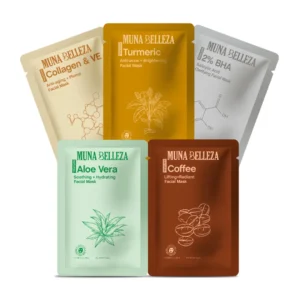 Face Mask Sheets (Pack of 5)
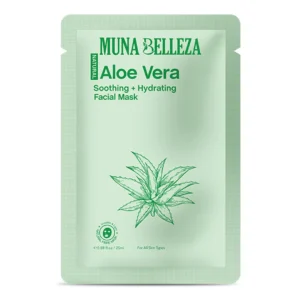 Aloe Vera Face Mask Sheet
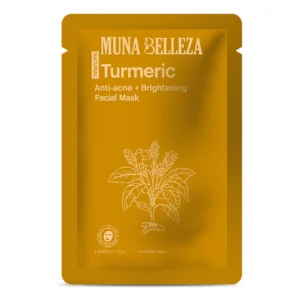 Turmeric Face Mask Sheet