 Gentle skincare for clear, even-looking skin
Large pores on your face are one of the most common things people notice in the mirror, and one of the least understood. They are not a sign of dirty skin or poor care. In most cases they come down to three things you did not choose: the skin you inherited, how much oil it makes and how old you are.
Knowing which of those is behind yours is useful, because each one calls for a different response. Below, we look at what pores are for, why they look bigger on some faces and some areas, and what keeps them from looking larger over time.
What are pores, and what do they do?
Pores are the tiny openings of hair follicles on the surface of the skin. Almost every one has an oil gland attached. The gland makes sebum, an oily substance that travels up the follicle and spreads over the skin to keep it soft and slow down water loss.
You also have sweat pores, which are separate and far too small to see. When people talk about visible pores, they mean the oil-producing kind. Your face has thousands of them, most densely on the forehead, nose and chin.
So pores are working parts of healthy skin. The aim is never to get rid of them, only to keep them clear and unremarkable.
Why are my pores so big?
If you have ever asked yourself “why are my pores so big”, dermatology research points to three main causes, and most people have a mix.
Your skin makes a lot of oil
This is the strongest link. In a study published in the British Journal of Dermatology, oil output was the factor most closely tied to pore size, ahead of age and sex. The more sebum a gland produces, the wider its opening tends to be. It is also why enlarged pores and shiny skin so often appear together.
The skin around the pore has lost firmness
Each pore is held in shape by the collagen and elastin around it. When that support thins, the opening slackens and stretches, a little like a buttonhole in worn fabric. Pores affected this way often look oval or teardrop-shaped instead of round, especially on the cheeks.
The hair follicle itself is large
A thicker follicle has a wider opening. Follicle size is inherited, and it is one reason pores tend to be more visible on men than on women.
Is pore size genetic?
Largely, yes. Your genes set your skin type, your follicle size and how active your oil glands are. If a parent has visibly large pores, you are more likely to have them too.
Research comparing women in several countries has also found clear differences in average pore size between ethnic groups, which supports the idea that much of it is inherited. None of this means nothing can be done. It means the realistic goal is to make the best of the pores you have.
Do pores get bigger with age?
They often look bigger, even though oil production usually falls as you get older. The reason is firmness. From your late twenties, skin makes a little less collagen each year, and the walls around each pore loosen.
Sun speeds this up more than anything else. Years of ultraviolet exposure break down collagen and elastin, and thicken the outer layer of skin around the pore rim, which makes openings more obvious. People who have spent a lot of time in strong sun without protection commonly notice it on the cheeks and nose first.
Why are nose pores more visible?
Nose pores sit on the oiliest part of the face. The glands there are larger and more active, so the openings are wider to begin with. One imaging study found that pores on the nose and forehead were more prominent than those on the cheeks at every age.
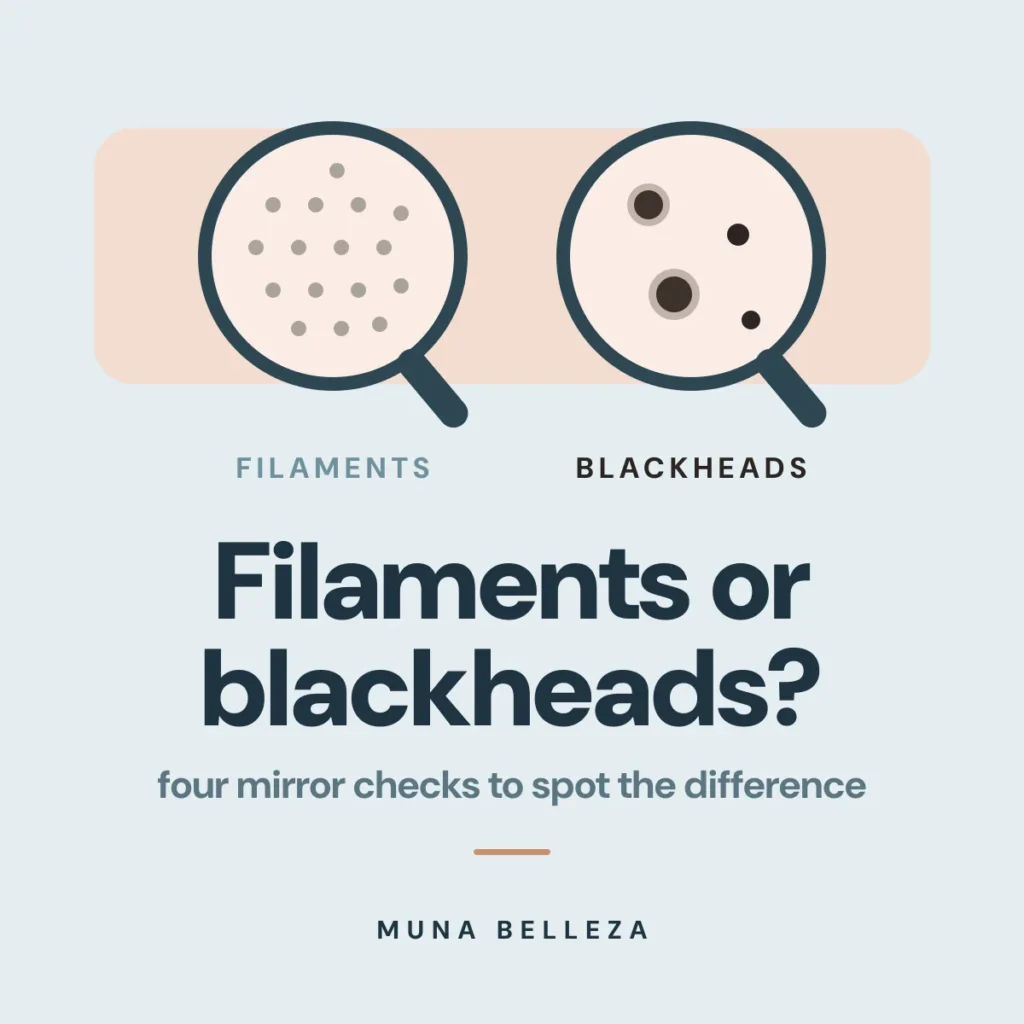
The nose is also where pores fill most easily. The small grey or yellowish dots you see there are usually sebaceous filaments, a normal lining of oil, and not blackheads. Our guide to sebaceous filaments vs blackheads shows how to tell them apart.
What else makes pores on your face look larger?
Several everyday things can make pores on your face stand out more than they need to.
- Clogging. Oil and dead cells collecting in a pore stretch it. When the plug reaches the surface and darkens, it becomes a blackhead, which draws the eye to the pore. We cover how these form in what are blackheads.
- Acne. Repeated breakouts can leave pores wider, and deep spots sometimes leave small pitted scars that look like large pores.
- Hormones. Androgens drive oil production, so pores often become more noticeable at puberty. Some women also see a change across their monthly cycle.
- Heat and humidity. Oil flows more freely in hot weather, so skin looks shinier and pores more open.
- Heavy products. Thick creams and makeup can settle into openings and outline them.
- Squeezing. Pressing on pores can damage the walls and leave them permanently wider.
- Harsh scrubbing. Irritated, slightly swollen skin shows its texture more.
Do pores open and close?
No. Pores have no muscles, so they cannot open with steam or close with cold water. Warmth softens the oil inside, and cold tightens the surface for a few minutes. Neither changes the size of the opening.
Is it possible to make pores smaller?
You cannot change the size a pore was built to be. What you can change is how full, stretched and shiny it is, and that makes a clear difference to how it looks.
If you are wondering how to make pores smaller in appearance, the approach depends on the cause.
- For oil, a gentle cleanser twice a day and salicylic acid a few times a week keep openings clear. We explain how it works inside the pore in salicylic acid for skin.
- For loss of firmness, daily sunscreen and a retinoid at night are the two steps with the most evidence.
- For clogging, non-comedogenic products and removing makeup every night matter most.
We have set out the full routine, the ingredients worth trying and the myths to skip in how to minimize pores.
How do you keep pores clear day to day?
A short routine is enough. Wash morning and night with a mild cleanser. Our Turmeric Face Wash is sulfate-free and suited to oily and combination skin. Once or twice a week, our Salicylic Acid Face Mask uses 2 percent salicylic acid with glycolic acid to clear what builds up inside. It is scented, and it is not for anyone allergic to aspirin.
In the morning, an antioxidant under sunscreen helps defend the collagen that keeps pores firm. Our Double Vitamin C Serum has no added fragrance or oils. We do not state its exact strength, and we do not make a sunscreen, so pair it with an SPF 30 or higher that you like wearing.
You can also browse products chosen for oily skin.
When should you see a doctor about large pores on your face?
Visible pores are a cosmetic matter and almost never a medical one. See a dermatologist if a single pore becomes much wider than the others and fills with a dark, firm plug, if pores come with painful or frequent breakouts, or if you want to discuss peels, microneedling or laser options for skin that has lost firmness.
The bottom line
Pore size is mostly decided by genetics, oil and age, and nobody has skin without them. Magnifying mirrors and filtered photos have made normal pores look like a flaw. Keep them clear, protect your skin from the sun and judge the result from an arm’s length away, which is how everyone else sees you.
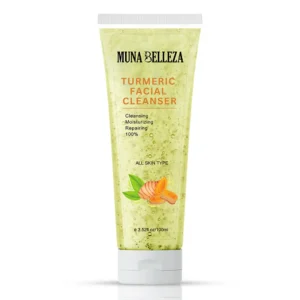 Turmeric Face Wash
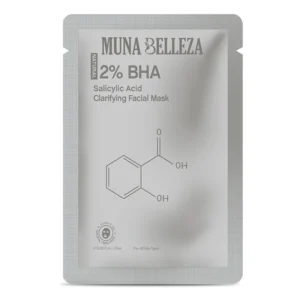 Salicylic Acid Face Mask
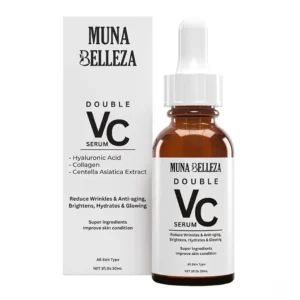 Double Vitamin C Serum
Pingback: How to Minimize Pores: What Works and What Doesn't
Pingback: Skin Texture: What Causes Bumps and How to Smooth Them