 Gentle skincare for clear, even-looking skin
Tranexamic acid for skin is used to soften the look of dark spots and uneven tone, especially the stubborn, patchy kind. It works by quieting one of the signals that tells pigment cells to go into overdrive, and it is gentle enough for most skin types, including sensitive skin.
It has become a favorite quickly, and the research is encouraging, though still young compared with older ingredients. Much of the strongest evidence also comes from forms a doctor prescribes, not from skincare. Here is what the studies show, what to expect from a serum or mask, and how to use it.
Tranexamic acid for skin: what is it?
Tranexamic acid is a synthetic relative of lysine, an amino acid. It has been used in medicine for decades to reduce heavy bleeding, for example during surgery or heavy periods.
Its effect on skin was noticed by accident. Doctors in Japan saw that patients taking it for other reasons had lighter-looking melasma, and research on its use for pigmentation followed.
In spite of its name, it is not an exfoliating acid. It does not peel the skin, and it will not sting the way glycolic or salicylic acid can.
How does tranexamic acid work on the skin?
When skin is exposed to UV light or becomes inflamed, surface cells release chemical messengers that tell the pigment cells below to make more melanin. One of those pathways runs through a substance called plasmin.
Tranexamic acid blocks that pathway. With fewer “make pigment” signals getting through, pigment cells calm down. It also appears to reduce the small blood vessels and inflammation that are often found in patches of melasma.
This is a different route from other tone-evening ingredients. Vitamin C and arbutin act on the enzyme that makes pigment, and niacinamide slows its delivery to the surface. That is why tranexamic acid is so often combined with them.
Does tranexamic acid work for dark spots?
The evidence for tranexamic acid for dark spots is promising, with some limits worth knowing.
For melasma, a review that pooled 11 studies and 667 people found that tranexamic acid improved melasma, used alone or added to other treatments, with mostly mild side effects.
For products applied to the skin, the trials are smaller. In one 12-week study, people with melasma used a 3% tranexamic acid solution on one side of the face and a prescription fading combination on the other. Both sides improved to a similar degree, and the tranexamic acid side had fewer side effects. In another, 2% tranexamic acid used for 12 weeks reduced the severity of melasma in 22 of 23 people.
For marks left after acne and for sun spots, there is less research, although it is growing and the early results are positive.
Is tranexamic acid as strong as hydroquinone?
In the small studies that compared them, the results on melasma were similar, and tranexamic acid was easier on the skin. That is encouraging. It is not the same as saying a cosmetic serum equals a prescription cream. Those studies used specific strengths under medical supervision, and hydroquinone still has far more research behind it. In the US, hydroquinone is available only by prescription.
Is the tranexamic acid in skincare the same as the tablets?
No, and the difference matters. The tablets are a prescription medicine. Much of the most impressive melasma research involves them, and they carry risks, including blood clots in people who are prone to them. They are prescribed and monitored by a doctor.
Tranexamic acid in a serum or mask stays in the skin. It is much milder, has a very good safety record, and gives more modest results. Never take the tablets for your skin without medical advice.
Does tranexamic acid make your skin sensitive to the sun?
No. It does not thin the skin or increase sun sensitivity, so you can use it in the morning. Sunscreen is still essential, for a different reason: sunlight is the main trigger for dark spots, and without daily protection, no tone-evening ingredient can keep up.
Who is tranexamic acid best for?
It suits people whose uneven tone is stubborn or keeps returning, and people whose skin objects to stronger options. Because it does not exfoliate, it is a comfortable choice for sensitive and dry skin, and for deeper skin tones, where irritation itself can leave new dark marks. If your marks are recent and few, a simpler routine of sunscreen and niacinamide may be all you need. To work out which kind of dark spot you have, see what hyperpigmentation is.
How do you use tranexamic acid?
Skincare products usually contain between 2% and 5%.
- Use it once or twice a day, after cleansing and before moisturizer.
- Apply it to the whole area of uneven tone, rather than just to individual spots.
- Follow with moisturizer, and with a broad-spectrum sunscreen of SPF 30 or higher in the morning.
- Use it consistently. Skipping days slows results.
It needs no adjustment period, and it does not have to be kept for nighttime.
What can you pair it with?
Almost anything. It has no known conflicts.
Niacinamide is its best-studied partner. In an eight-week trial, a product combining 2% niacinamide and 2% tranexamic acid reduced facial pigmentation more than the same product without them. We explain that ingredient in niacinamide for skin.
Vitamin C works well with it in the morning, and our guide to what vitamin C serum does covers that. Arbutin, retinoids and exfoliating acids are all compatible too, as long as your skin tolerates the overall routine.
How long does tranexamic acid take to work?
Expect to wait eight to twelve weeks for a visible difference. Some people notice a more even look after four weeks. Results continue while you use it, and pigment can return if you stop, particularly with melasma, which is a long-term condition. Our guide to melasma vs hyperpigmentation explains why.
Does tranexamic acid have side effects?
On the skin, very few. Occasional mild dryness, redness or irritation has been reported, and it usually settles. It is one of the gentler options for uneven tone, which is why it is often suggested for skin that cannot tolerate stronger products.
If you are pregnant or breastfeeding, check with your doctor before starting it, as you would with any new active ingredient.
Which of our products contain tranexamic acid?
One does. Our Turmeric Face Mask Sheet combines tranexamic acid with niacinamide, alpha arbutin, turmeric extract and panthenol. No fragrance is listed, and it has no exfoliating acids. Leave it on for 15 minutes, three or four evenings a week. It contains soy and honey extracts, which matters if you have allergies. The strength of tranexamic acid is not stated on the label.
Two others fit the same routine without containing it. The Dark Spot Correcting Serum is a daily serum with niacinamide and arbutin, and it contains fragrance. The Double Vitamin C Serum is a morning serum with vitamin C and hyaluronic acid, with no added fragrance.
When should you see a dermatologist?
See a dermatologist if you think you have melasma, if dark patches are spreading or changing, or if three months of careful home care has not helped. A dermatologist can confirm what kind of pigmentation you have and offer prescription options, including tranexamic acid tablets where appropriate.
Can you use tranexamic acid every day?
Yes. Daily use is how the studies were done, and it is gentle enough for long-term use. Pair it with sunscreen every single morning, or you are working against yourself.
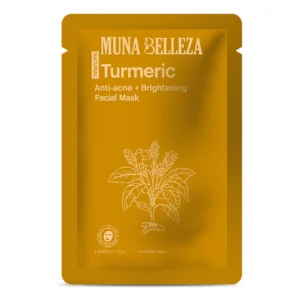 Turmeric Face Mask Sheet
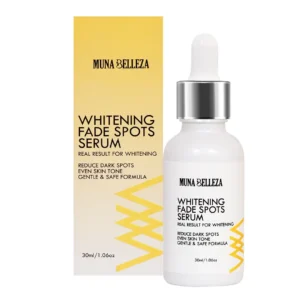 Dark Spot Correcting Serum
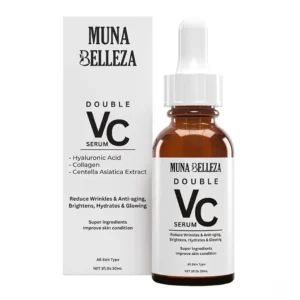 Double Vitamin C Serum
Pingback: Melasma vs Hyperpigmentation: Key Differences