 Gentle skincare for clear, even-looking skin
Niacinamide for skin is about as close to an all-rounder as skincare gets. It is a form of vitamin B3 that helps skin hold water, calms redness, reduces surface oil and softens the look of uneven tone, and it does all of this while being gentle enough for almost every skin type.
It is not magic, and stronger is not always better. Most of the research used modest strengths, and results take weeks, not days. Here is what niacinamide does, what it does not do, and how to use it properly.
Niacinamide for skin: what is it?
Niacinamide, also called nicotinamide, is one of the two main forms of vitamin B3. Your skin cells use it to make molecules they need for energy and repair.
It is water-soluble, stable in light and air, and comfortable at the skin’s natural pH. Those qualities make it easy to put into serums, moisturizers and masks, and easy to combine with other ingredients.
It is not the same as niacin, the other form of vitamin B3, which can cause flushing. Niacinamide does not have that effect at normal strengths.
What does niacinamide do to skin?
If you have wondered “what does niacinamide do to skin”, the research points to five things.
It strengthens the skin barrier
Niacinamide increases the skin’s production of ceramides and other fats that hold the outer layer together. A stronger barrier keeps water in and irritants out.
It reduces surface oil
In a study of a 2% niacinamide moisturizer, the amount of oil on the skin’s surface fell over two to four weeks of use. With less oil stretching them, pores also look smaller.
It evens out the look of skin tone
Niacinamide slows the transfer of pigment from the cells that make it to the surface cells where you see it.
It calms redness
It has anti-inflammatory effects, which is why it suits blotchy, easily flushed and breakout-prone skin.
It softens the look of fine lines
In a 12-week study of women aged 40 to 60, a 5% niacinamide moisturizer improved fine lines, blotchiness, sallowness and elasticity compared with the same cream without it.
Does niacinamide help with acne?
It can, particularly with red, inflamed spots. In one trial of 76 people with moderate inflammatory acne, a 4% niacinamide gel performed about as well as a prescription antibiotic gel over eight weeks. It also reduces surface oil, which helps.
It is less effective on blackheads and whiteheads, where the pore is physically plugged. For those, salicylic acid or a retinoid is the better tool, and niacinamide works well alongside either. We explain that side of things in what salicylic acid does for skin.
Does niacinamide help with dark spots?
Yes, modestly and gradually. In a well-known study, a 5% niacinamide moisturizer reduced the appearance of dark spots and uneven tone after four weeks, compared with a moisturizer without it.
Niacinamide does not stop pigment from being made. It slows its delivery to the surface, so the effect is gentle and continues only while you use it. Sunscreen is essential, because a single afternoon of sun can undo weeks of progress. It pairs well with vitamin C, arbutin and tranexamic acid, which work on pigment in other ways. For the bigger picture, see what hyperpigmentation is, or our guide to tranexamic acid.
Is niacinamide good for dry skin?
Yes. This is one of its most useful and least advertised effects. By raising ceramide levels, niacinamide reduces the amount of water that escapes through the skin. In a study of people with very dry, eczema-prone skin, a 2% niacinamide cream reduced water loss more effectively than plain petroleum jelly.
On its own it is not a moisturizer, so use it in or under a cream.
Can you use niacinamide with vitamin C?
Yes. The idea that the two cancel each other out comes from experiments in the 1960s that used unstabilized ingredients at high heat. Modern formulas do not behave that way, and plenty of products contain both. Use them together, or use vitamin C in the morning and niacinamide at night if you prefer.
Niacinamide is also compatible with retinoids, exfoliating acids, hyaluronic acid and peptides. It is often recommended alongside a retinoid, because it helps the skin tolerate it.
Is a higher percentage of niacinamide better?
No. Most of the published research used 2% to 5%. Products with 10% or even 20% are popular, but there is little evidence that they work better, and they are more likely to cause redness, stinging or small bumps.
If a strong niacinamide serum has irritated your skin, that does not mean niacinamide is wrong for you. A lower strength, or niacinamide inside a moisturizer, may suit you perfectly.
How to use niacinamide serum?
For anyone wondering how to use niacinamide serum, the routine is short.
- Cleanse, and pat your skin dry.
- Apply a few drops of serum to the whole face, not just to problem areas.
- Follow with moisturizer.
- In the morning, finish with sunscreen.
It needs no special waiting time, and you do not have to build up slowly, although patch testing a new product is always sensible.
When to use niacinamide serum?
Morning, night or both. It does not make skin more sensitive to the sun, so there is no reason to keep it for the evening. If you are deciding when to use niacinamide serum in a routine with many steps, put it after cleansing and any watery toner, and before heavier creams and oils.
Most people use it once or twice a day. Consistency matters more than timing.
How long does niacinamide take to work?
Oil control and a calmer look can show in two to four weeks. Changes in tone and dark spots take eight to twelve weeks. Barrier benefits build quietly over the first month. If you have seen nothing after three months of daily use with sunscreen, it may not be the right ingredient for that particular concern.
Does niacinamide have side effects?
Few. It is one of the best-tolerated active ingredients. Some people notice mild redness, itching or a warm flush, mostly with high-strength products. Breakouts after starting a niacinamide serum are usually caused by other ingredients in the formula, since niacinamide itself does not speed up cell turnover and does not cause purging.
It is considered safe during pregnancy and breastfeeding. Patch test first if your skin is reactive.
Which of our products contain niacinamide?
Several, and each uses it alongside other ingredients. The full list is on our niacinamide page.
The Dark Spot Correcting Serum is a daily serum that pairs niacinamide with arbutin, sodium hyaluronate and panthenol for the look of marks and uneven tone. The strength is not stated on the label, and it contains fragrance.
In the Turmeric Face Mask Sheet, niacinamide is fourth on the ingredient list, with tranexamic acid and alpha arbutin. No fragrance is listed, which makes it our gentlest option.
The Day and Night Cream Set has niacinamide in both jars, so dry or normal skin gets it without an extra step. The night cream contains fragrance.
When should you see a dermatologist?
See a dermatologist for acne that is painful, widespread or scarring, for dark patches that keep spreading or look uneven, and for redness that does not settle. Niacinamide supports the skin. It does not replace a diagnosis.
Can you use niacinamide every day?
Yes. Daily use is how it works, and it is gentle enough to keep in your routine all year.
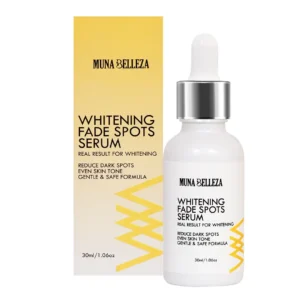 Dark Spot Correcting Serum
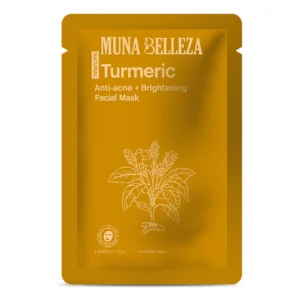 Turmeric Face Mask Sheet
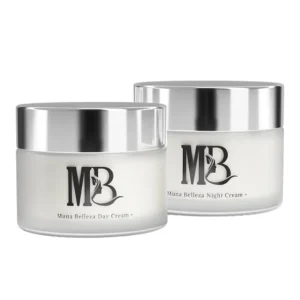 Day and Night Cream Set
Pingback: Tranexamic Acid for Skin: Benefits and How to Use It
Pingback: What Does Vitamin C Serum Do? Benefits and Timing
Pingback: Melasma vs Hyperpigmentation: Key Differences
Pingback: What Is Hyperpigmentation? Types, Causes and Care
Pingback: Centella Asiatica for Skin: Why Cica Calms
Pingback: Dark Spots After Acne: Why They Stay, How to Fade Them
Pingback: Skin Barrier 101: Signs of Damage and How to Repair It
Pingback: How to Minimize Pores: What Works and What Doesn't
Pingback: Can Dry Skin Cause Acne? Yes, Here's How
Pingback: The Best Skincare Routine for Oily Skin, Step by Step
Pingback: Adult Acne: Why It Happens After Your Teens