 Gentle skincare for clear, even-looking skin
Hyaluronic acid for skin is a hydrator. It holds many times its own weight in water, so it makes the surface of the skin feel plumper, smoother and more comfortable within minutes. It suits every skin type, including oily and acne-prone skin.
It is also the ingredient people most often use the wrong way. Applied to dry skin in dry air with nothing on top, it can leave your face feeling tighter than before. Here is what it does, how to apply it so it works, and what it can and cannot do for breakouts.
Hyaluronic acid for skin: what is it?
Despite the name, hyaluronic acid is not an exfoliating acid. It is a sugar molecule that your body makes naturally, and about half of the body’s supply is in the skin, where it holds water and keeps tissue supple. The amount in the skin falls with age and sun exposure.
In skincare, it works as a humectant, an ingredient that attracts and holds water. On labels, you will usually see sodium hyaluronate, a salt form that is more stable and slightly smaller. Some products list hydrolyzed hyaluronic acid, which has been broken into smaller pieces.
Does the size of the molecule matter?
A little. Large molecules stay on the surface and form a light, water-holding film. Smaller ones reach slightly further into the outer layer. In one study of 76 women, creams with 0.1% hyaluronic acid improved skin hydration and elasticity over 60 days, and the smallest size also reduced the depth of fine wrinkles. Many products now combine several sizes.
What are the benefits of hyaluronic acid serum?
The benefits of hyaluronic acid serum are real, and mostly about water.
- Skin holds more moisture, so it feels softer and less tight.
- Fine lines caused by dryness look less obvious, because a hydrated surface is plumper.
- Makeup sits better on smooth, hydrated skin.
- It is light and non-greasy, so it adds hydration without oil.
- It is very well tolerated. Reviews of the research report few side effects.
What it does not do is rebuild collagen, change deep wrinkles or replace a moisturizer. The plump look also fades if you stop using it, because the effect comes from water held in the skin, not from a lasting change.
Why does hyaluronic acid sometimes make skin feel drier?
Because a humectant needs water to hold. If the air is very dry and there is little moisture on your skin, hyaluronic acid has nothing to draw from the outside, and the water it holds near the surface can evaporate. The result is that tight, slightly sticky feeling some people report.
Two habits fix it. Apply the serum to damp skin, and always put a moisturizer on top to seal the water in. In a humid climate you may get away without the second step. In heating, air conditioning or desert air, you will not.
When to use hyaluronic acid serum?
Morning, night or both. It has no known conflicts with other ingredients, and it does not make skin more sensitive to the sun.
The order is what matters:
- Cleanse, and leave your skin damp.
- Apply the serum while your face is still slightly wet.
- Follow within a minute with moisturizer.
- In the morning, finish with sunscreen.
If you use a retinoid or an exfoliating acid at night, hyaluronic acid before your moisturizer can make the routine feel less drying.
Is hyaluronic acid good for acne?
It is good for acne-prone skin, which is slightly different from saying it clears acne. If you are asking “does hyaluronic acid help acne”, the direct answer is no: it does not unclog pores, reduce oil or kill bacteria.
Where it does help with acne is in making treatment bearable. Benzoyl peroxide, salicylic acid and retinoids all tend to dry and irritate the skin, and many people give up on them for that reason. A light, oil-free hydrator keeps skin comfortable, so you can keep using the products that do the real work. Dermatologists routinely tell acne patients to moisturize for exactly this reason.
Can hyaluronic acid cause acne?
The ingredient itself is very unlikely to. Hyaluronic acid is water-based, contains no oil and is not known to clog pores.
When people break out after starting a hyaluronic acid product, the usual cause is something else in the bottle, such as a heavy oil, a silicone that does not suit them or fragrance. Check the full ingredient list, and introduce one new product at a time so you can tell what is responsible. If your skin is acne-prone, our picks for acne-prone skin are a simpler place to start.
Is more hyaluronic acid better?
No. Very high percentages do not hydrate better, and they can feel tacky or leave skin tight. Most well-made serums contain 2% or less, and that is plenty. What sits around the hyaluronic acid matters more: glycerin, panthenol and a good moisturizer on top will do more for dry skin than doubling the concentration.
Does hyaluronic acid work for oily skin?
Yes, and it is one of the better choices. Oily skin can still be short of water, especially after foaming cleansers and acne products. When that happens, it often looks shiny and feels tight at the same time. A hyaluronic acid serum adds water without adding oil, and on humid days it may be the only hydration oily skin needs under sunscreen.
Does a hyaluronic acid serum replace moisturizer?
For most people, no. A serum adds water, and a moisturizer keeps it there. Skipping the second step is the main reason people decide hyaluronic acid does not work for them.
Is hyaluronic acid better than glycerin?
They are teammates. Glycerin is a smaller, older and cheaper humectant that performs just as well in studies, and many of the best hydrating products contain both. If a product has one without the other, it is not a flaw. We compare them in more detail in glycerin for skin.
Who should be careful?
Almost no one. Hyaluronic acid applied to the skin is considered safe in pregnancy and for sensitive skin. Reactions are rare and are usually caused by other ingredients. Patch test any new product if your skin reacts easily.
Injected hyaluronic acid fillers are a different thing entirely. They are a medical procedure, not skincare, and the two should not be confused.
Which of our products contain hyaluronic acid?
Hyaluronic acid or sodium hyaluronate is in most of our range, and you can see the full list on our hyaluronic acid page. These three fit the routines above.
In the Double Vitamin C Serum, hyaluronic acid is the fifth ingredient, alongside glycerin, betaine and ascorbic acid. It has no added fragrance or oils, so it layers easily under moisturizer in the morning.
The Dark Spot Correcting Serum is built around niacinamide and arbutin, with sodium hyaluronate and glycerin for hydration. It contains a light fragrance, so patch test first.
The Turmeric Face Wash is a sulfate-free cleanser for oily and combination skin, with sodium hyaluronate and aloe so skin does not feel stripped.
When should you see a dermatologist?
See a dermatologist if your skin stays dry, flaky or tight whatever you apply, or if your acne is painful, widespread or leaving marks. A hydrating serum supports a routine. It cannot stand in for one.
Can you use hyaluronic acid every day?
Yes, twice a day if you like. Daily use on damp skin, sealed with moisturizer, is how it works best.
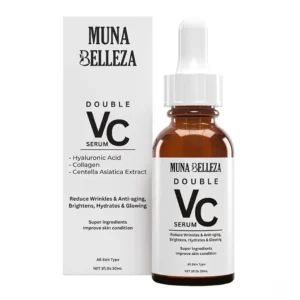 Double Vitamin C Serum
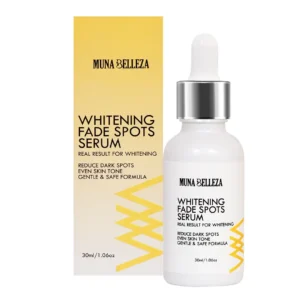 Dark Spot Correcting Serum
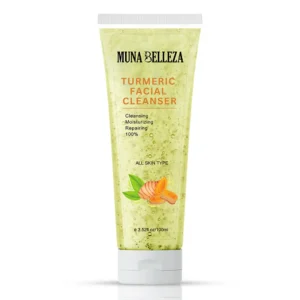 Turmeric Face Wash
Pingback: Glycerin for Skin: Why This Simple Humectant Works
Pingback: Dry, Patchy Skin on Your Face: Causes and Care
Pingback: Why Is My Skin So Oily? 7 Causes and Fixes