 Gentle skincare for clear, even-looking skin
What does vitamin C serum do? It works as an antioxidant that helps defend skin against daily damage from sun and pollution, it brightens the look of dull, uneven skin, and it supports the collagen that keeps skin firm. Used every morning under sunscreen, it is one of the most worthwhile additions to a routine.
It is also one of the fussiest ingredients to formulate and to store, and not every product delivers what the label implies. Here is what vitamin C can do, how long it takes, how to use it and what to check before buying.
What does vitamin C serum do, and what is in it?
Vitamin C is a nutrient your body cannot make, and healthy skin contains a lot of it. Sun exposure and age both reduce the amount in the skin, and what you eat reaches the surface layers only in small quantities. Applying it directly is the most efficient way to raise skin levels.
The pure, most-studied form is L-ascorbic acid, listed as ascorbic acid. It is effective but unstable: it breaks down in light, air and heat.
Other forms are gentler and more stable, including 3-O-ethyl ascorbic acid, sodium ascorbyl phosphate and ascorbyl glucoside. The skin has to convert these into ascorbic acid, and they have less research behind them, but they suit sensitive skin better.
What are the benefits of vitamin C serum?
The main benefits of vitamin C serum come down to three well-supported effects.
It protects as an antioxidant
UV light and pollution create free radicals that damage skin cells and collagen. Vitamin C neutralizes them. In one study, a solution of vitamins C and E with ferulic acid reduced the skin damage caused by UV light. This is extra protection under sunscreen, not a replacement for it.
It brightens and evens the look of skin tone
Vitamin C interferes with the enzyme that makes pigment, so dark spots and dullness gradually look softer.
It supports collagen
Vitamin C is essential for making collagen. In a six-month study, a cream with 5% vitamin C improved the appearance of sun-aged skin compared with a cream without it.
Those vitamin C serum benefits for skin build slowly, and they depend on the product actually being fresh and well made.
Does vitamin C work for dark spots on your face?
Yes, gradually. Using vitamin C for dark spots on your face is supported by clinical research. In a 16-week study of people with melasma, 5% ascorbic acid on one side of the face was compared with 4% hydroquinone on the other. Hydroquinone gave the better result, but vitamin C caused far fewer side effects.
That sums it up fairly: vitamin C is a milder option that works more slowly. It does best alongside daily sunscreen and partner ingredients such as niacinamide and tranexamic acid. If you are not sure what kind of dark spots you have, start with what hyperpigmentation is.
Is a higher percentage of vitamin C better?
Only up to a point. In a classic study of how ascorbic acid is absorbed, uptake by the skin increased with concentration up to 20% and then fell. The same study found it had to be formulated at an acidic pH, below 3.5, to get in at all.
For most people, 10% to 20% is the useful range for pure ascorbic acid. Higher strengths mostly bring more stinging. Lower strengths and gentler forms can still be worthwhile, especially for sensitive skin, with more gradual results.
Can you use vitamin C with niacinamide?
Yes. The old advice to keep them apart came from early experiments with unstable ingredients under heat. Modern formulas do not react in a meaningful way on your skin, and the two complement each other. Layer one over the other, or split them between your morning and evening routines. We explain the second ingredient in niacinamide for skin.
When to use vitamin C serum?
Morning is best. The reason for when to use vitamin C serum comes from its antioxidant role: it is most useful during the day, when skin faces UV light and pollution. Worn under sunscreen, it adds a second layer of defense.
Using it at night is fine too, and it is a reasonable choice if it tingles under your daytime products. Once a day is enough. The absorption study found that skin levels reach a plateau after a few days of daily use and then last for several days, so missing a morning is not a disaster.
How to use vitamin C serum?
Here is how to use vitamin C serum for the best results.
- Start with a clean, dry face.
- Smooth three or four drops over the face and neck.
- Wait a minute for it to absorb.
- Follow with moisturizer.
- Finish with a broad-spectrum sunscreen of SPF 30 or higher.
If your skin is sensitive, start every second day and build up. Pure ascorbic acid can tingle for a few seconds. Lasting redness or burning means the product is too strong for you.
What can you layer it with?
Vitamin E and ferulic acid make it more stable and more effective. Hyaluronic acid and niacinamide fit comfortably. Use exfoliating acids and retinoids at a different time of day if your skin is easily irritated.
How do you know if your vitamin C has gone off?
Look at the color. Fresh ascorbic acid serum is clear to pale straw-colored. As it oxidizes, it turns yellow, then orange, then brown. A dark serum has lost most of its strength and can irritate.
To slow this down, close the cap tightly, store the bottle somewhere cool and dark, and aim to finish it within about three months of opening. Opaque or dark bottles and airless pumps protect it better than clear droppers.
How long does vitamin C serum take to work?
Skin can look a little brighter within two to four weeks. Dark spots and uneven tone need eight to twelve weeks. Changes in firmness and fine lines take three to six months of daily use. The antioxidant protection begins from the first week, though you cannot see it.
Does vitamin C have side effects?
Most people tolerate it well. Tingling, mild redness or dryness can occur, mainly with high-strength, low-pH ascorbic acid. A gentler derivative or a lower strength usually solves it. Vitamin C is considered safe during pregnancy. Patch test first if your skin is reactive.
How does vitamin C appear in our products?
So you can choose with clear expectations, here is exactly where it sits. The full list is on our vitamin C page.
The Double Vitamin C Serum is a 30 ml morning serum with ascorbic acid, hyaluronic acid, glycerin, centella and beta-glucan, and no added fragrance or oils. The strength is not stated, and ascorbic acid is tenth on the ingredient list. Think of it as a gentle daily vitamin C, not a high-strength treatment. Use it within about three months of opening.
The Turmeric Face Mask Sheet contains a stable vitamin C derivative, 3-O-ethyl ascorbic acid, alongside three other tone-evening ingredients, and it is unscented.
The Dark Spot Correcting Serum contains no vitamin C. Its niacinamide and arbutin make it a good evening partner. It contains fragrance.
When should you see a dermatologist?
See a dermatologist about dark patches that are spreading, a spot that is changing in shape or color, or uneven tone that has not responded to three months of careful home care. Some kinds of pigmentation need prescription treatment.
Can you use vitamin C serum every day?
Yes. Daily use, ideally in the morning under sunscreen, is how it is meant to be used and how the studies were done.
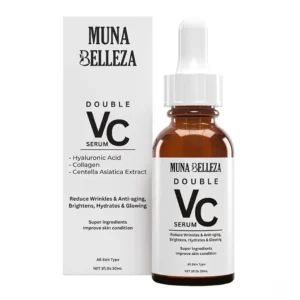 Double Vitamin C Serum
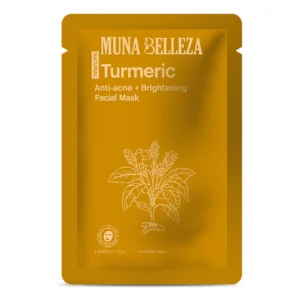 Turmeric Face Mask Sheet
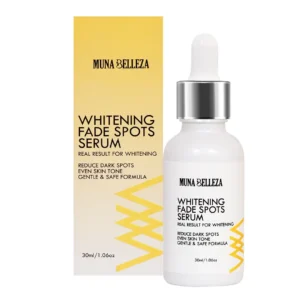 Dark Spot Correcting Serum
Pingback: Melasma vs Hyperpigmentation: Key Differences
Pingback: How to Improve Skin Elasticity at Any Age